
5 Common Heavy Rope Mistakes to Avoid
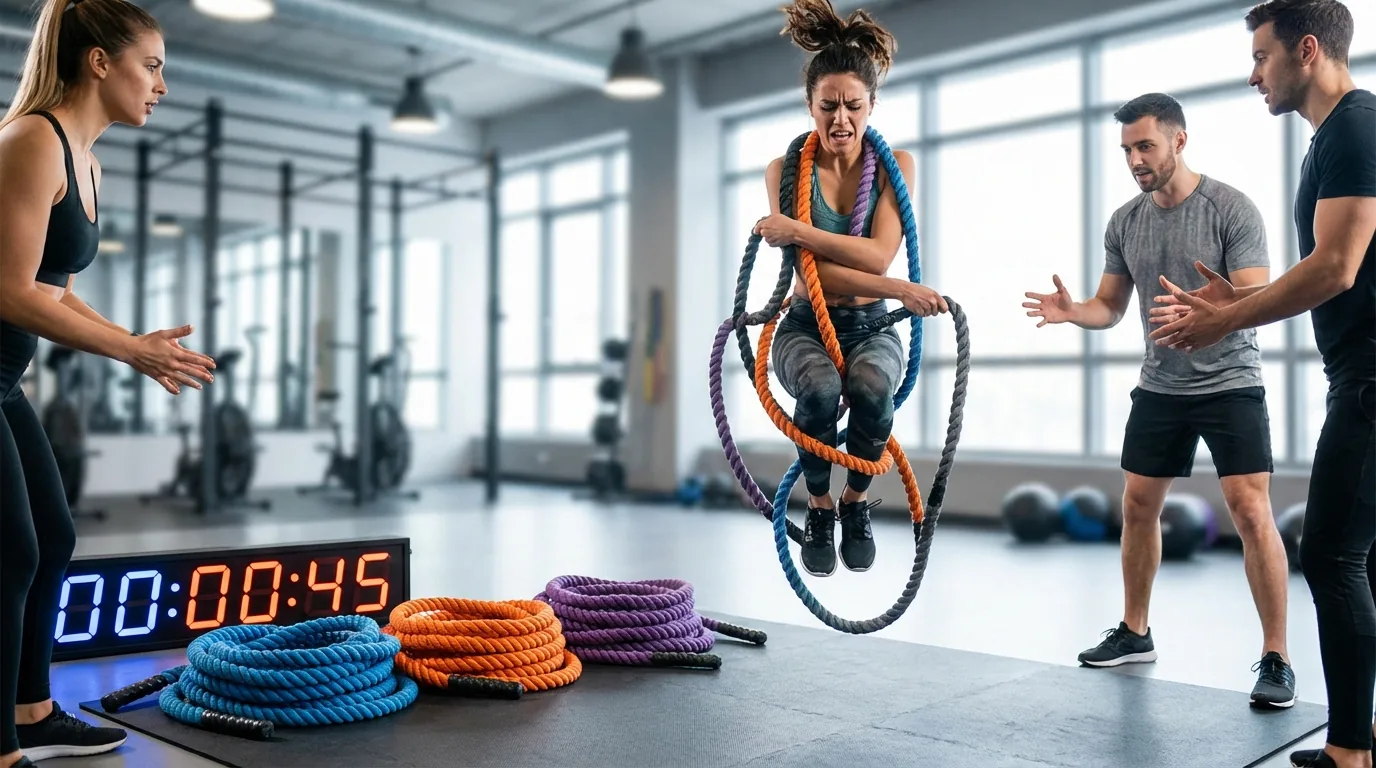
Table of Contents
- Introduction
- Mistake 1: Choosing the Wrong Rope Weight or Length
- Mistake 2: Over-Engaging the Arms and Shoulders
- Mistake 3: Jumping Too High and Landing Hard
- Mistake 4: Neglecting Your Training Surface
- Mistake 5: Ignoring the Importance of Grip Tension
- Pro Tips for Heavy Rope Success
- Frequently Asked Questions
Introduction
At SwingMass, we know that heavy ropes are a game-changer for anyone looking to incinerate calories and build functional upper-body strength. Unlike standard speed ropes that focus almost exclusively on footwork and cardiovascular endurance, weighted ropes introduce a resistance element that engages the forearms, shoulders, and core. However, because these tools are significantly more demanding on the central nervous system and the joints, the margin for error is much smaller. A mistake that might cause a minor trip with a PVC speed rope can lead to a strained rotator cuff or a painful shin lash when you’re swinging a pound or more of resistance.
Many fitness enthusiasts dive into heavy rope training with the "more is better" mentality, assuming that if a 0.5lb rope is good, a 2lb rope must be better. This logic often leads to poor form, early burnout, and avoidable injuries. Understanding the mechanics of heavy rope rotation is essential for longevity in the sport. You aren't just jumping over a cord; you are managing the centrifugal force of a heavy object moving in a circle around your body. This requires a different set of cues and a more disciplined approach to volume and intensity.
In this guide, we will break down the five most common heavy rope mistakes we see at the gym and in home workouts. Whether you are using a weighted jump rope for HIIT or utilizing thick arborist-style ropes for dragging and pulling exercises, avoiding these pitfalls will help you see faster results. We will also recommend specific gear that can help mitigate these issues, ensuring your journey into the world of weighted resistance is both safe and effective.
Mistake 1: Choosing the Wrong Rope Weight or Length
The most frequent error beginners make is selecting a rope that is either too heavy for their current strength level or incorrectly sized for their height. When a rope is too heavy, the user often compensates by "muscling" the rope with their entire arms rather than using their wrists. This leads to rapid fatigue and a complete breakdown in jumping rhythm. Conversely, if the rope is the wrong length, you’ll find yourself either tripping constantly (if it's too short) or dealing with an awkward bounce that ruins your timing (if it's too long). A heavy rope that is too long hits the ground with significant force, causing it to kick back toward your feet.
Proper sizing for a heavy jump rope is slightly different than a speed rope. Because the rope is thicker and heavier, it doesn't "cut" through the air as easily, and the arc it forms is wider. Most experts recommend a rope that, when stepped on with one foot, the handles reach just to the armpits. If you are using a rope for non-jumping exercises, such as pulling or dragging, the weight becomes even more critical. Using a 150-foot arborist rope for dragging requires a base level of grip strength that many beginners haven't yet developed.
To avoid these issues, we recommend starting with a rope that offers adjustability or a weight that provides "feedback" without being overwhelming. A 1lb rope is often the "sweet spot" for most adults, providing enough resistance to feel the rope's position in space without causing immediate shoulder failure.
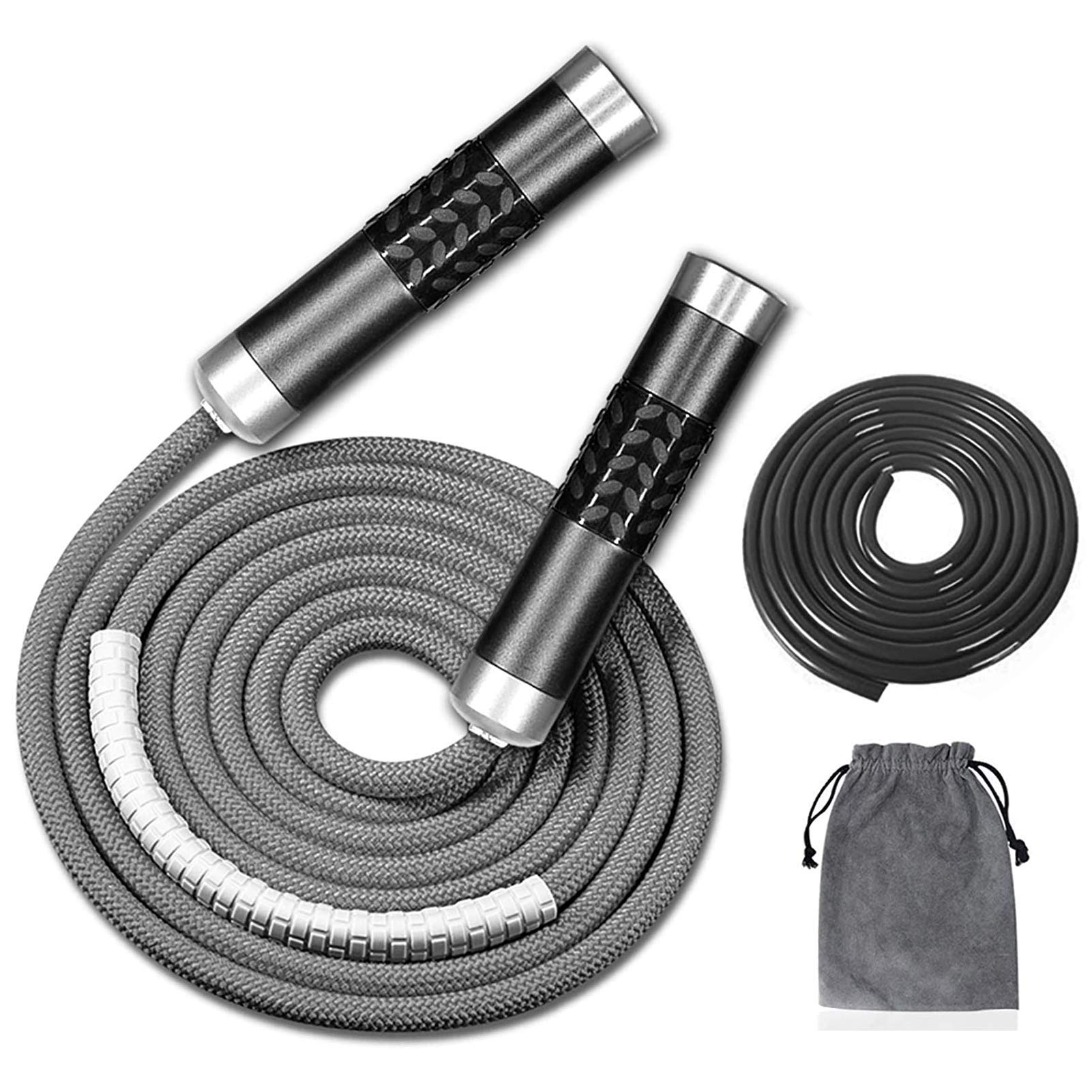
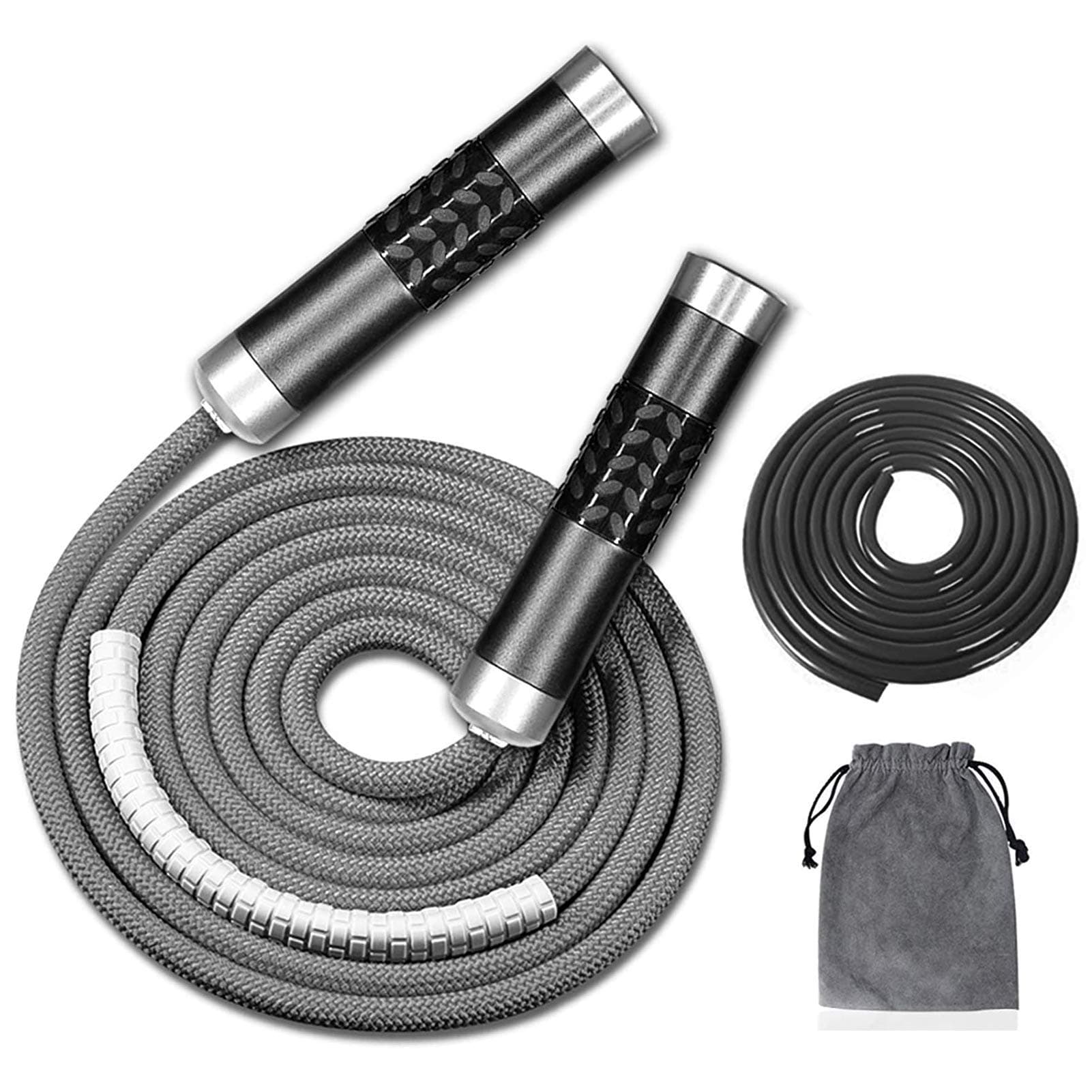
[Redify Weighted Jump Rope for Workout Fitness(1LB), Tangle-Free Ball Bearing Rapid Speed Skipping Rope for MMA Boxing Weight-loss,Aluminum Handle Adjustable Length 9MM Fabric Cotton+9MM Solid PVC Rope Grey](https://www.amazon.com/dp/B08RB46DBY?tag=swing-mass-20)
Rating: ⭐ 4.6/5 (3353 reviews)
Price: Check Website
- The upgraded tangle-free double ball bearings ensures that the jump rope is free of tangle, fast and smooth, so that you can jump without any worries.
- The gold combination of 9mm braided cotton rope + 9mm solid PVC rope can not only prolong your jumping rope life by at least two times, but also make your jump rope freely switch from cotton rope to PVC rope, making your rope skipping more colorful.
- Aluminum + Silicone Grips Handle not only make the jump rope Durable, but also comfortable to grip. The raised silicone little oval design increases friction and prevents the handle from coming off during jumping.A great choice for Double Unders,Wod,MMA,Boxing and crossfit training.
The Redify Weighted Jump Rope is an exceptional choice for those who are worried about getting the sizing or weight wrong. We recommend this product specifically because of its "gold combination" design—it includes both a 9mm braided cotton rope and a 9mm solid PVC rope. This allows you to switch between materials based on your workout goals and the surface you are jumping on. It is best for beginners and intermediate jumpers who need a versatile tool that can grow with their skill level.
One of the standout features is the 1lb total weight, which is perfectly balanced for building muscle without sacrificing speed. The handles are made of durable aluminum with silicone grips, featuring a raised oval design to prevent slipping during sweaty sessions. The built-in lock allows for quick length adjustments, solving the common problem of "wrong-size" tripping. The only drawback is that the cotton rope, while comfortable, may fray if used on rough concrete without the included protective tube. Compared to fixed-length ropes, the Redify offers significantly more value and customization.
Mistake 2: Over-Engaging the Arms and Shoulders
When the rope gets heavy, the natural instinct is to use the big muscles—the biceps and deltoids—to move it. This is known as the "T-Rex" or "Winging" mistake. You’ll see people swinging their entire arms in large circles, with their elbows far away from their ribs. Not only is this incredibly inefficient, but it also places an enormous amount of stress on the rotator cuffs. The power for a heavy rope should still come primarily from the wrists, supported by the forearms. The shoulders should remain retracted and "packed" down, acting as stabilizers rather than the primary movers.
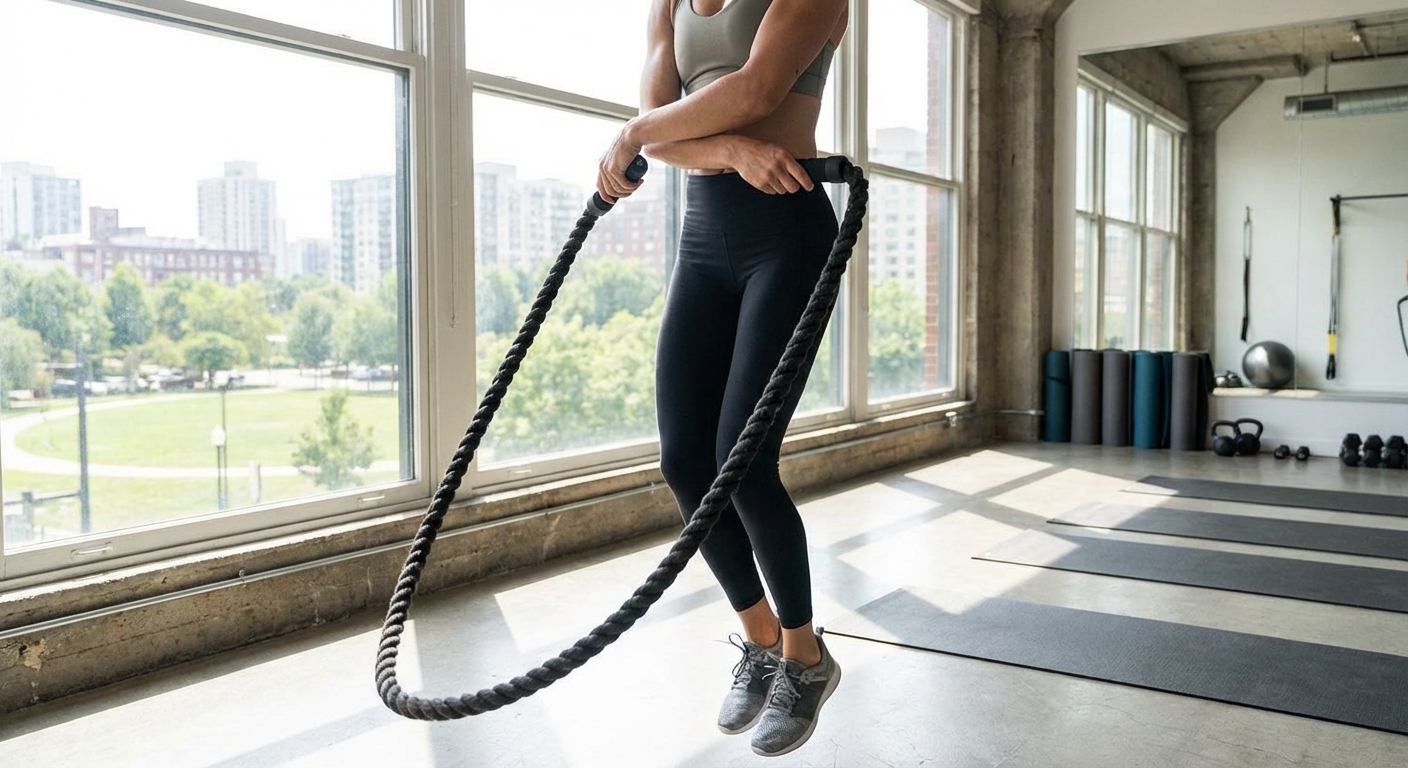
To fix this, focus on keeping your elbows "glued" to your hip bones. If you struggle with this, try tucking a small towel under each armpit while you jump; if the towels fall, your arms are moving too much. By narrowing the diameter of your arm circles, you allow the weight of the rope to generate its own momentum. This makes the workout more sustainable and shifts the focus to your core and grip strength rather than just burning out your shoulders in the first sixty seconds.
Furthermore, over-engaging the arms often leads to a "hitch" in the rope's rotation. When the arms move too much, the rope doesn't maintain a smooth, circular arc. It becomes elliptical, which makes timing your jumps nearly impossible. If you are using a heavy rope for feedback, you want that feedback to be consistent. A high-quality rope with smooth bearings can help correct this by ensuring the rope rotates independently of the handle movement.
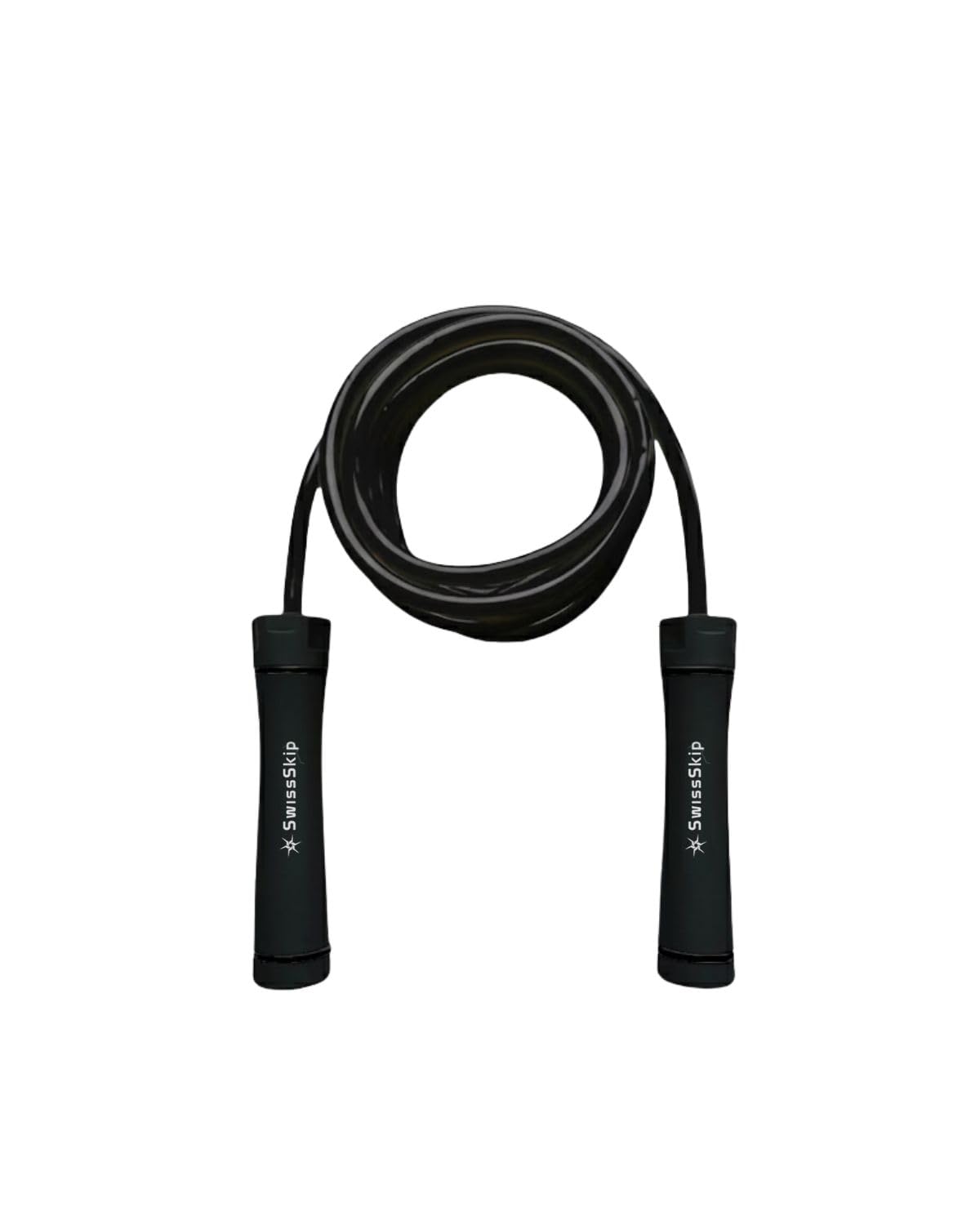
[Heavy Jump Rope by Dayan Kolev; 1lbs Weighted Skipping Rope for Beginners and Professional Athletes; Black](https://www.amazon.com/dp/B0DZTZ3FLS?tag=swing-mass-20)
Rating: ⭐ 4.5/5 (2 reviews)
Price: Check Website
- Made of heavy duty material designed to last a long time and withstand usage on different surfaces. Theunbreakable handles with a confortable grip assure for a long life of your Swissskip rope.
- Our heavy ropes provide a lot of feedback which is ideal for jumpers learing how to skip. For beginners, small sessions that increase over time are ideal for building muscle while improving skipping skills.
- Our heavy rope is also loved by the experienced athletes due to the weight of the rope. It takes a lot of stamina to skip for a longer period of time creating perfect conditions for a powerful workout at any location.
The Heavy Jump Rope by Dayan Kolev is our top recommendation for correcting form issues. We recommend it because it is specifically designed to provide high levels of tactile feedback. This feedback is crucial for beginners who are trying to learn the "feel" of the rope's location without looking down. It is best for professional athletes and serious beginners who want a heavy-duty, no-frills tool that emphasizes durability and consistent rotation.
The standout feature of the Dayan Kolev rope is its unbreakable handles. Many weighted ropes fail at the handle connection point due to the high torque of the heavy cable, but this model is built to withstand intense daily use on various surfaces. It weighs 1lb, providing that perfect resistance level for muscle building. A potential drawback is that it is not as easily adjustable as some PVC models, so you must ensure you select the correct size or be prepared to tie knots near the handles. Compared to lighter ropes, this provides a much more "connected" feel to the movement.
Mistake 3: Jumping Too High and Landing Hard
Because a heavy rope moves slower than a speed rope, many users feel the need to jump higher to "clear" the thicker cord. This is a recipe for shin splints and knee pain. Heavy rope jumping should be a low-impact activity. You only need to jump high enough for the rope to pass under your feet—usually no more than an inch or two off the ground. When you jump too high, you land with more force, and when you add the extra weight of the rope to your body weight, the impact on your joints increases exponentially.
Focus on a "pogo" style jump. Your knees should have a slight bend, but the movement should come primarily from the ankles and calves. You want to stay on the balls of your feet at all times. If your heels are touching the ground, you are likely jumping too high and losing the elastic energy required for a smooth rhythm. This mistake is often compounded by the weight of the rope pulling the user forward, leading to a "donkey kick" where the feet flip back toward the glutes. This ruins your posture and makes it harder to recover for the next jump.
Another aspect of this mistake is the "double bounce." Some beginners jump twice for every one rotation of the rope. While this can be a way to build endurance, it often leads to poor timing. It is better to slow down the rotation of the rope and focus on a single, clean jump. This teaches your brain to synchronize your lower body explosion with the upper body resistance, which is the core benefit of weighted rope training.
Mistake 4: Neglecting Your Training Surface
The surface you jump on is just as important as the rope itself. Heavy ropes, especially those made of PVC or braided fibers, are subject to intense friction. If you jump on abrasive surfaces like concrete or asphalt, you will shred your rope in a matter of weeks. More importantly, these hard surfaces provide zero shock absorption for your joints. When you are swinging a weighted rope, the downward force is greater, meaning your body has to absorb more energy upon impact.
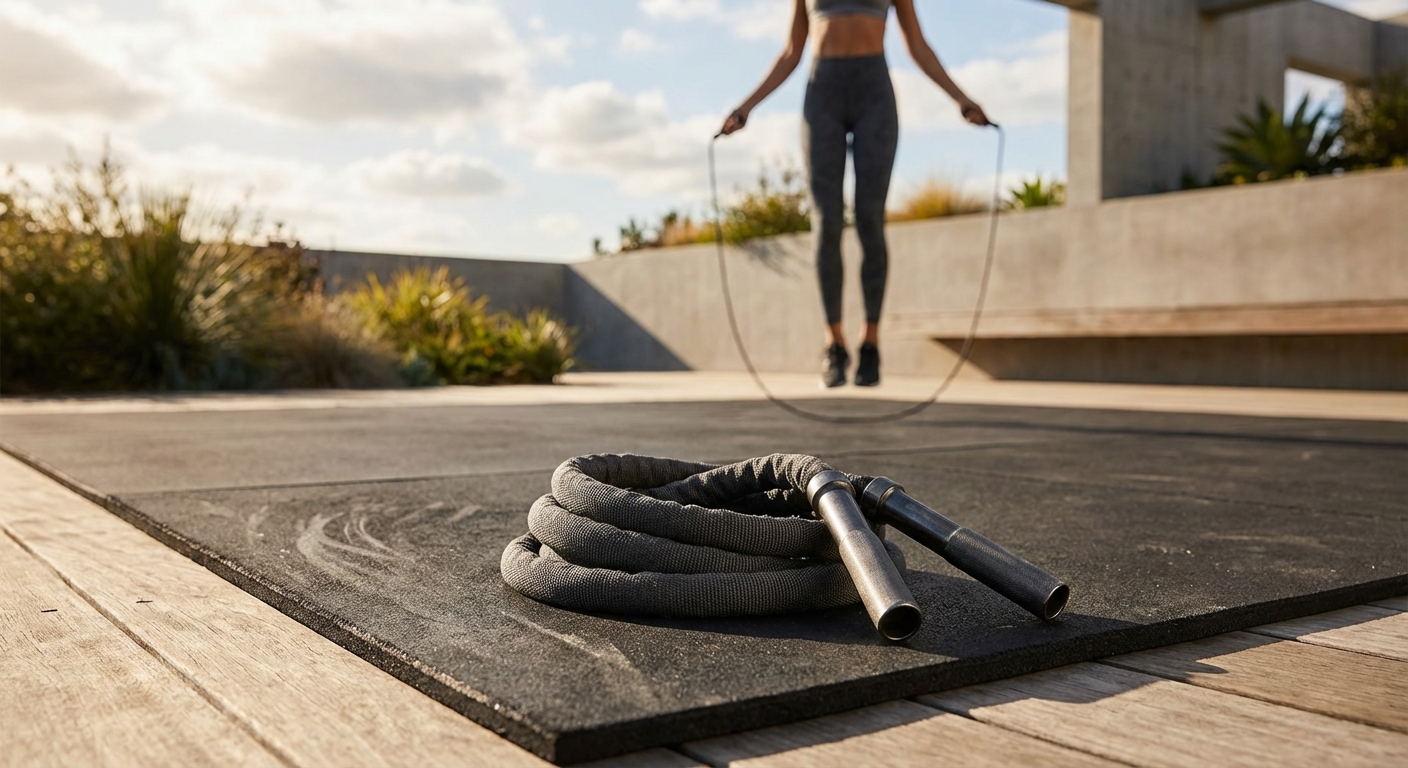
Ideally, you should jump on a rubberized gym floor, a dedicated jump rope mat, or even a smooth wooden surface. These surfaces provide a slight "give" that protects your ankles and knees while also preserving the integrity of the rope. If you are using heavy ropes for other purposes, such as outdoor rigging or tree pulling, the environment matters even more. You need a rope that is specifically engineered for weather resistance and high-tensile strength to avoid snapping under pressure.
For those who take their heavy rope training outdoors—perhaps for "battle rope" style drills or dragging exercises—the durability of the material is the primary concern. In these scenarios, you aren't just looking for a jump rope; you're looking for an industrial-grade tool that can handle the elements.
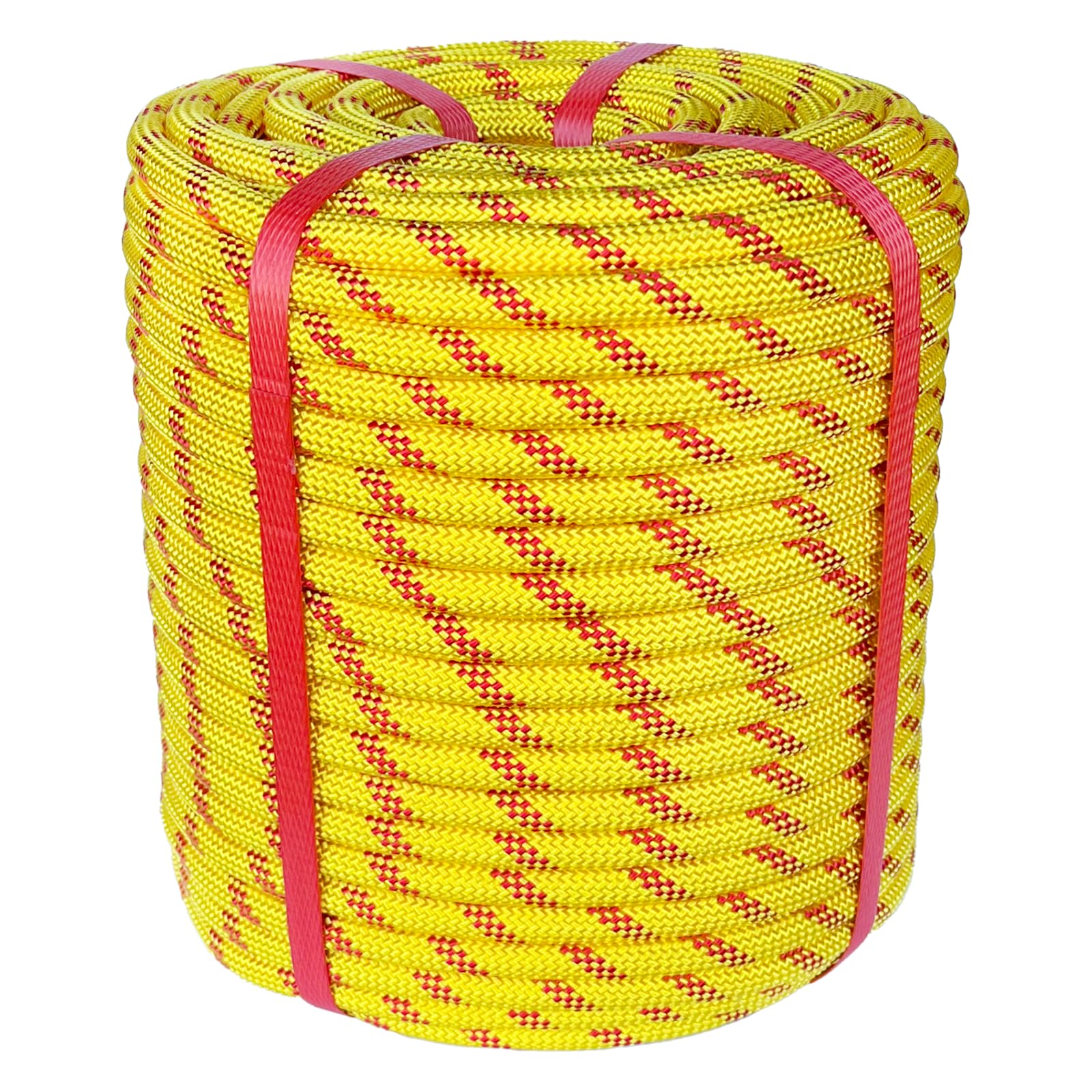
[Climbing Rope 1/2 in x 150 Ft Yellow Bull Rope Polyester Braided Arborist Rope 1/2 inch 48 Strands 150ft for Tree Pulling,Nautical Rigging Rope Swing Yellow 1/2IN x 150 FT](https://www.amazon.com/dp/B0CN93CS9N?tag=swing-mass-20)
Rating: ⭐ 4.6/5 (296 reviews)
Price: Check Website
- 【High Strength】 This Arborist Rigging Rope features a 48-strand braided design, providing excellent strength and durability, making it an ideal choice for various outdoor applications such as construction, climbing, swinging, and sailing.
- 【Durability】Constructedd from high-quality polyester fiber, this rope boasts excellent wear resistance and weather resistance, maintaining its strength and flexibility under harsh conditions such as wind, rain, and sunlight.
- 【Safety】Withh a diameter of 1/2 inch and a length of 150 feet, this Arborist Rigging Rope offers both strength and ease of operation, significantly enhancing safety during use.
While not a jump rope, we highly recommend the 1/2 in x 150 Ft Climbing Rope by Arborist Rigging for those incorporating "heavy rope" pulls, drags, and nautical rigging into their fitness routine. This is the top pick for anyone needing a high-strength, multi-purpose rope for outdoor functional training. It is best for homeowners, arborists, or "strongman" style trainers who need a rope that can pull a truck or be used for heavy-duty suspension.
The standout features are the 48-strand braided polyester design and its compliance with US standards for safety. It is incredibly weather-resistant, meaning it won't degrade under the sun or rain like cheaper nylon ropes. With a 150-foot length, it offers incredible versatility for dragging exercises across a field. The drawback is that it is strictly a utility rope—you cannot use this for traditional jumping. However, compared to standard utility ropes, its 1/2-inch diameter provides a superior grip that won't bite into your hands during heavy lifts.
Mistake 5: Ignoring the Importance of Grip Tension
The final mistake is what we call the "Death Grip." Beginners often squeeze the handles as hard as they can, fearing the heavy rope will fly out of their hands. This leads to premature forearm fatigue and can actually cause tendonitis in the elbow (tennis elbow). A heavy rope requires a firm grip, but it should not be a white-knuckle squeeze. Your hands should be relaxed enough to allow the swivel bearings in the handles to do their job.
If your forearms are burning more than your shoulders or lungs, you are likely gripping too hard. Try to think of your hands as hooks rather than clamps. The weight of the rope will naturally pull against your fingers; you simply need to provide enough resistance to keep the handle seated in your palm. Using handles with ergonomic grips or silicone sleeves can help you maintain control with less effort.
Additionally, pay attention to where you hold the handles. Holding them too close to the end (where the rope attaches) reduces your leverage, making the rope feel heavier and harder to control. Holding them too far back can make the rotation feel "floppy." Find the center of the grip and maintain a consistent, moderate tension. This will allow you to jump for longer durations and focus on the cardiovascular benefits of the workout.
Pro Tips for Heavy Rope Success
To get the most out of your weighted rope, we recommend a "ramp-up" approach. Do not replace your entire cardio routine with heavy ropes on day one. Start by incorporating 30 seconds of heavy rope work for every 2 minutes of standard jumping. This allows your connective tissues—especially in the shoulders and wrists—to adapt to the new stresses without becoming inflamed. Heavy ropes are a high-intensity tool; treat them with the same respect you would a heavy barbell.
Another pro tip is to film yourself from the side. You might think your elbows are tucked in, but the camera often reveals "winging" that you can't feel in the moment. Watch for the height of your jump and the arc of the rope. If the rope is hitting the ground too far in front of you, you may need to shorten it or adjust your hand position slightly back toward your hips.
Finally, don't forget to maintain your gear. For PVC heavy ropes, wipe them down after use to remove sweat, which can make the rope brittle over time. For braided ropes, check for snags or fraying regularly. A well-maintained rope is a safe rope, and it will provide the consistent performance you need to reach your fitness goals.
Frequently Asked Questions
Can I use a heavy jump rope every day? It is generally not recommended for beginners to use a heavy jump rope every day. Because of the increased load on the shoulders, wrists, and calves, your body needs more recovery time than it does with a standard speed rope. Most athletes find that 3 to 4 times a week is the "sweet spot" for building strength without overtraining. If you experience persistent joint pain, take a break and check your form.
Consistent daily use can lead to overuse injuries like rotator cuff tendonitis or shin splints. If you really want to jump every day, consider alternating between a light speed rope and a weighted rope. This "undulating periodization" keeps your heart rate high while giving your muscle groups a chance to recover from the heavy resistance.
Is a 1lb rope heavy enough for a good workout? Yes, a 1lb rope is significantly heavier than it sounds. While 1lb might seem light in the context of a dumbbell, the centrifugal force generated when swinging that weight in a circle makes it feel much heavier. For most people, a 1lb rope is the perfect balance for high-intensity interval training (HIIT) and muscle toning.
If you are an advanced athlete or looking for "Strongman" style training, you might eventually move up to a 2lb or 3lb rope. However, the 1lb range is where most users see the best results in terms of fat loss and shoulder definition without sacrificing the ability to maintain a decent jumping rhythm.
How do I stop my heavy rope from tangling? Tangling is usually a result of two things: the material of the rope and the quality of the handle bearings. Cheaper weighted ropes often have "memory," meaning they stay coiled from the packaging. To fix this, hang your rope over a door or a pull-up bar when not in use so gravity can pull the kinks out.
Choosing a rope with ball bearings in the handles, like the Redify or Dayan Kolev models, is the best way to prevent tangling during use. These bearings allow the rope to spin freely regardless of how you are holding the handles. If the rope still tangles, it may be a sign that your hand circles are uneven, causing the rope to lose its tension.
Do heavy ropes help with weight loss? Absolutely. Heavy ropes are one of the most efficient calorie-burning tools available. Because they engage more muscle groups—specifically the core, back, and shoulders—the metabolic demand is much higher than standard jumping. Studies have shown that jumping with a weighted rope can burn up to 25% more calories per minute than jumping with a light rope.
Furthermore, the strength-building aspect of heavy ropes helps increase your resting metabolic rate. By building lean muscle mass in the upper body, you continue to burn more calories even after your workout is finished. It’s an ideal tool for those looking to maximize their workout efficiency in a short amount of time.
What is the difference between a weighted handle and a weighted rope? Weighted handles put the weight in your hands, which can help with grip strength but doesn't change the physics of the rope's rotation. A weighted rope, where the weight is distributed throughout the cable itself, creates centrifugal force. This force is what provides the "feedback" and the intense shoulder workout associated with heavy rope training.
At SwingMass, we always recommend ropes where the weight is in the cable. This provides a much smoother experience and a more effective workout. Weighted handles can often feel "clunky" and don't provide the same cardiovascular challenge as moving a heavy cable through the air.
Our Top Picks for 2026
We've spent hours researching and testing to find the absolute best options currently available.
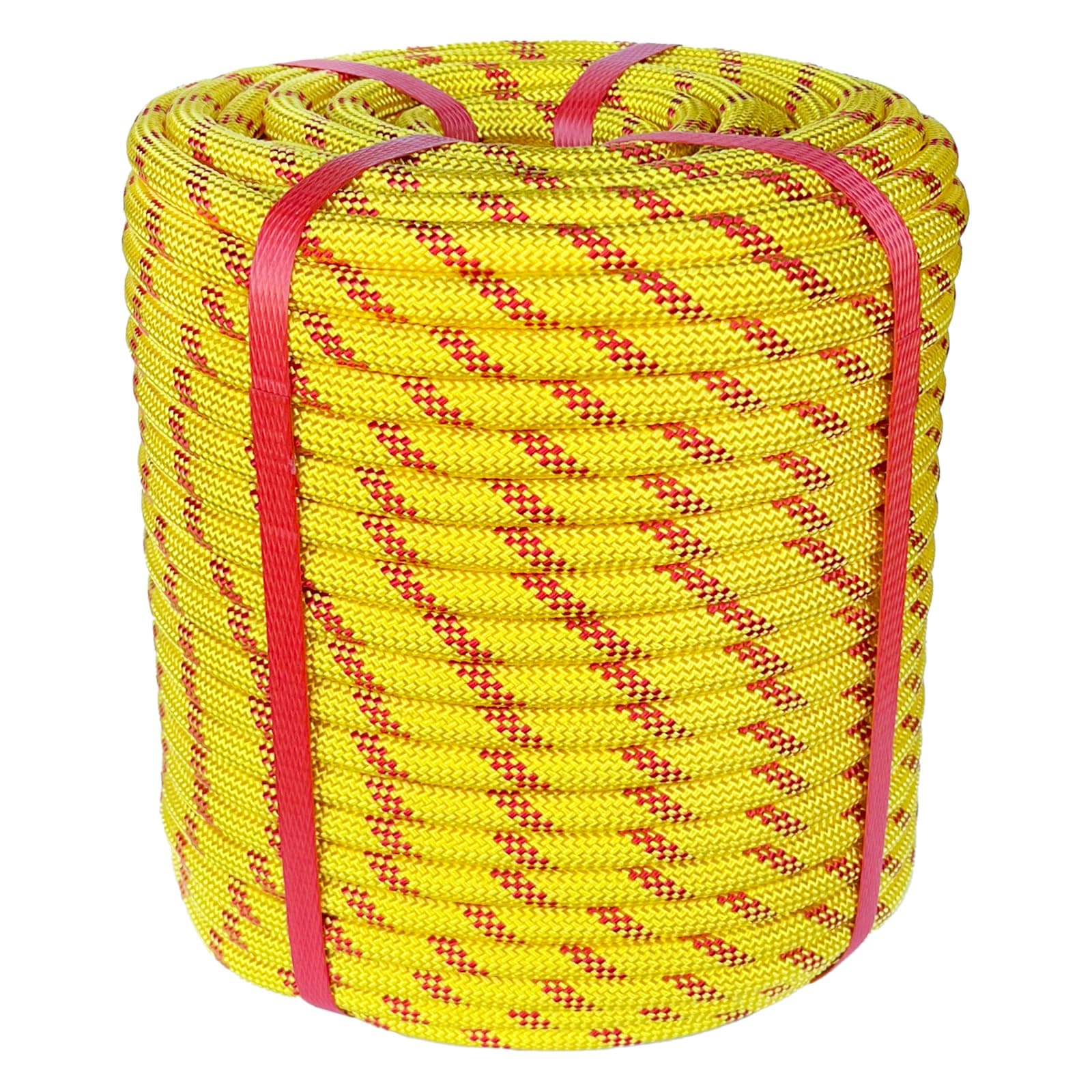
Climbing Rope 1/2 in x 150 Ft Yellow Bull Rope Polyester Braided Arborist Rope 1/2 inch 48 Strands 150ft for Tree Pulling,Nautical Rigging Rope Swing Yellow 1/2IN x 150 FT
- 【High Strength】 This Arborist Rigging Rope features a 48-strand braided design, providing excellent strength and durability, making it an ideal choice for various outdoor applications such as construction, climbing, swinging, and sailing.
- 【Durability】Constructedd from high-quality polyester fiber, this rope boasts excellent wear resistance and weather resistance, maintaining its strength and flexibility under harsh conditions such as wind, rain, and sunlight.
- 【Safety】Withh a diameter of 1/2 inch and a length of 150 feet, this Arborist Rigging Rope offers both strength and ease of operation, significantly enhancing safety during use.
Redify Weighted Jump Rope for Workout Fitness(1LB), Tangle-Free Ball Bearing Rapid Speed Skipping Rope for MMA Boxing Weight-loss,Aluminum Handle Adjustable Length 9MM Fabric Cotton+9MM Solid PVC Rope Grey
- The upgraded tangle-free double ball bearings ensures that the jump rope is free of tangle, fast and smooth, so that you can jump without any worries.
- The gold combination of 9mm braided cotton rope + 9mm solid PVC rope can not only prolong your jumping rope life by at least two times, but also make your jump rope freely switch from cotton rope to PVC rope, making your rope skipping more colorful.
- Aluminum + Silicone Grips Handle not only make the jump rope Durable, but also comfortable to grip. The raised silicone little oval design increases friction and prevents the handle from coming off during jumping.A great choice for Double Unders,Wod,MMA,Boxing and crossfit training.
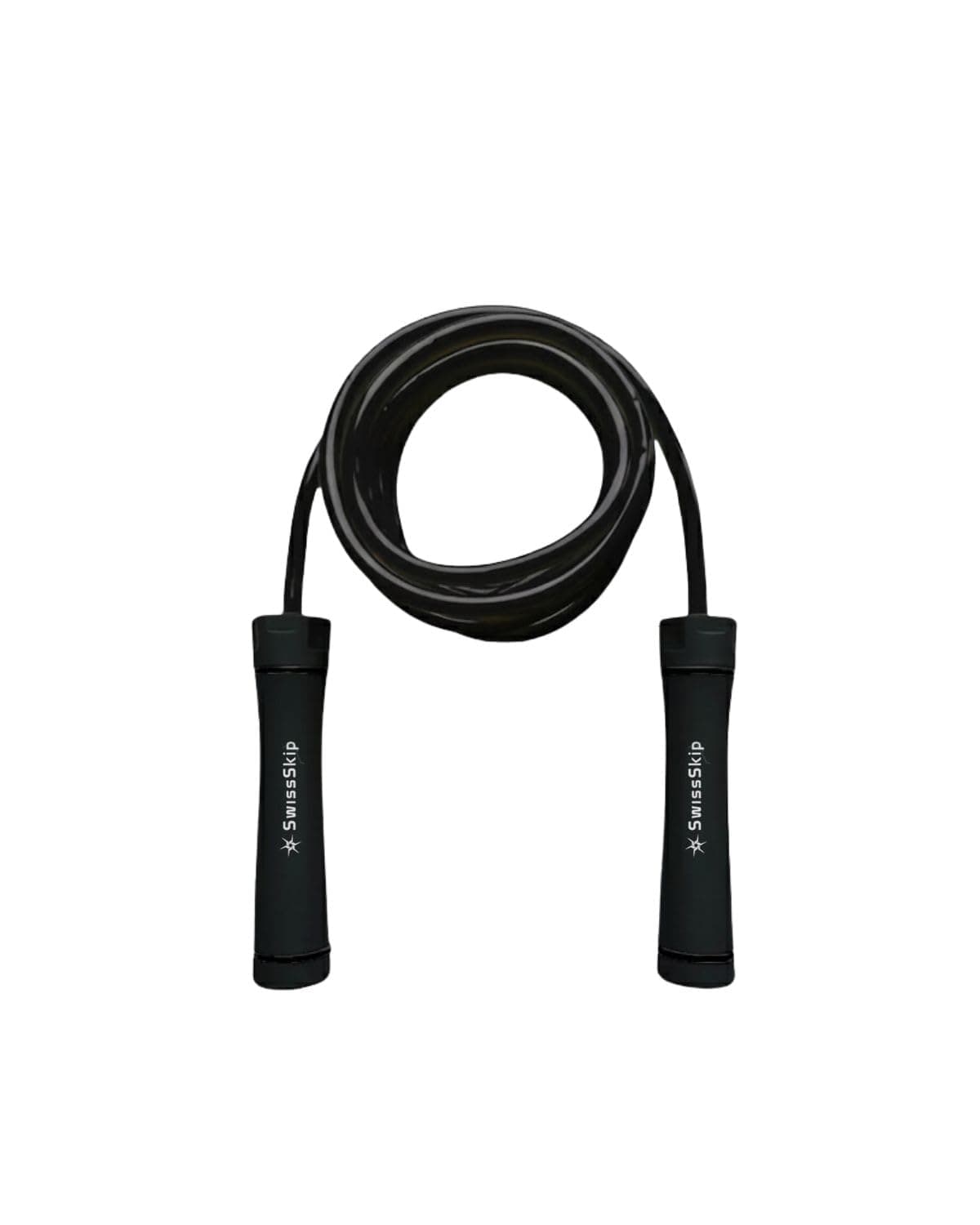
Heavy Jump Rope by Dayan Kolev; 1lbs Weighted Skipping Rope for Beginners and Professional Athletes; Black
- Made of heavy duty material designed to last a long time and withstand usage on different surfaces. Theunbreakable handles with a confortable grip assure for a long life of your Swissskip rope.
- Our heavy ropes provide a lot of feedback which is ideal for jumpers learing how to skip. For beginners, small sessions that increase over time are ideal for building muscle while improving skipping skills.
- Our heavy rope is also loved by the experienced athletes due to the weight of the rope. It takes a lot of stamina to skip for a longer period of time creating perfect conditions for a powerful workout at any location.