
How Often Should You Use Weighted Ropes?

How Often Should You Use Weighted Ropes?
The jump rope has evolved far beyond the playground. For fitness enthusiasts, the weighted jump rope is a powerhouse tool that combines cardiovascular endurance with functional strength training. However, because weighted ropes add resistance to every swing, they place a unique demand on your muscles and joints that a standard speed rope simply doesn't. This leads many to wonder: how often can you actually use them without risking injury?
Finding the right jump rope frequency is a balancing act. If you jump too little, you won't see the metabolic and muscular adaptations you're after. If you jump too much, you run the risk of shin splints, tendonitis, or central nervous system fatigue. Understanding how to program these sessions into your weekly routine is essential for long-term progress and joint health.
In this guide, we will break down the ideal frequency for weighted jump rope workouts based on your experience level, explain the physiological impact of heavy ropes, and provide actionable schedules to help you reach your fitness goals. Whether you are looking to torch fat or build "jump rope shoulders," knowing when to push and when to rest is your first step toward success.
Table of Contents
- The Mechanics of Weighted Ropes vs. Speed Ropes
- Finding Your Baseline: Frequency for Beginners
- The Role of Recovery and Muscle Growth
- Advanced Training Volume: Pushing the Limits
- Common Mistakes and Pro Tips for Consistency
- Frequently Asked Questions
The Mechanics of Weighted Ropes vs. Speed Ropes
When you transition from a standard PVC rope to a weighted version, the physics of your workout changes entirely. A standard speed rope focuses on revolutions per minute (RPM) and agility, primarily taxing your calves and cardiovascular system. In contrast, a weighted rope shifts a significant portion of the load to your upper body. As the heavy cable rotates, your forearms, biceps, shoulders, and back must work overtime to control the centrifugal force and maintain the rope's arc.
This added resistance means that a 10-minute session with a 1-lb or 2-lb rope can feel as taxing as a 30-minute session with a light rope. Because the muscular engagement is so much higher, you must treat weighted jumping more like a weightlifting session than a simple cardio bout. Your shoulders and wrists are particularly vulnerable to the repetitive strain of a heavy rope, requiring specific attention to form and recovery time that speed ropers often overlook.
Furthermore, the impact on your lower body is amplified. Although you aren't jumping higher, the extra weight on your frame increases the force your ankles and knees must absorb upon landing. This is why "frequency" isn't just about how many days a week you jump, but also about the total volume of weight moved during those sessions. Balancing this intensity is the key to preventing "jumpers' knee" and other common overuse injuries.
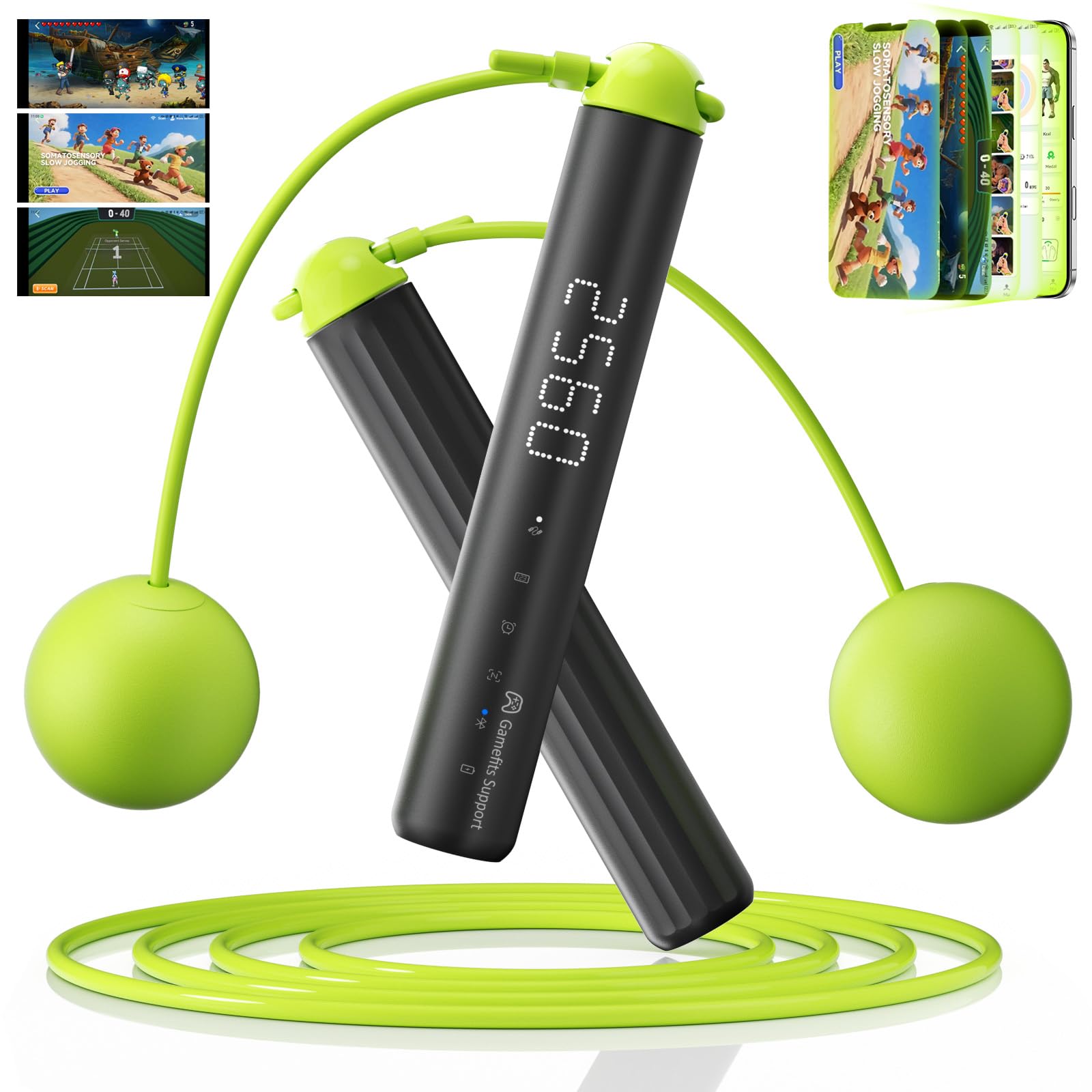
[Smart Jump Rope with 9-Axis Gyroscope,Wireless Jumping Rope,Supports Somatosensory Games Real-time Data Tracking via App,Fitness Jump Rope for Kids and Adults Ideal for Home or Gym SJ600](https://www.amazon.com/dp/B0FQBYMDQH?tag=swing-mass-20)
Rating: ⭐ 4.2/5 (7 reviews)
Price: Check Website
- [Motion-sensing games]:Equipped with a high-precision nine-axis gyroscope, it accurately detects every jump and captures movement trajectories in real time, delivering more responsive and fluid motion feedback. Experience a wide range of interactive motion games that transform fitness into an enjoyable gaming experience
- [Three Exercise Modes]:Easily switch between freestyle, counting, and timed modes to achieve your fitness goals. Track the number and duration of jumps or focus on freestyle training for maximum flexibility
- [APP Data Analysis]: The app tracks jump rope counts, duration, and calories burned in real time, generating visual charts to guide users in scientific training. It records historical data, allows goal setting and reminders, helps users understand training trends, and continuously improves athletic performance
I highly recommend the Smart Jump Rope SJ600 for anyone serious about optimizing their jump rope frequency. The standout feature is the 9-axis gyroscope, which provides incredibly accurate real-time data tracking via an app. For those trying to find their ideal frequency, having a visual chart of your jump counts, duration, and calorie burn is a game-changer. It allows you to see exactly when your performance starts to dip, which is a clear indicator that you might need an extra rest day.
This rope is best for data-driven athletes and tech-savvy fitness enthusiasts who enjoy gamified workouts. The motion-sensing games make high-intensity sessions much more engaging. One potential drawback is the learning curve for the app, and the handle weight might feel light for those seeking a "heavy" handle feel, as the resistance comes from the rope's movement tracking rather than pure handle mass. However, compared to traditional "dumb" ropes, the ability to set goals and receive reminders via the app helps maintain a consistent schedule without overtraining.
Finding Your Baseline: Frequency for Beginners
For those just starting with weighted jump ropes, the "less is more" rule is paramount. Your connective tissues—tendons and ligaments—take significantly longer to adapt to new stresses than your muscles do. While your lungs and biceps might feel ready for a daily session after the first week, your Achilles tendons and the fascia in your feet may be screaming for a break. A safe starting point for a beginner is 2 to 3 sessions per week, with at least 48 hours of rest between each session.
During these initial weeks, focus on short intervals rather than long, continuous jumping. For example, a beginner might perform 30 seconds of jumping followed by 60 seconds of rest, repeating this for 10 to 15 minutes. This allows your heart rate to spike and recover while preventing the form breakdown that occurs when your shoulders get fatigued. If your form slips, the heavy rope is more likely to catch on your feet or cause you to land awkwardly, increasing the risk of injury.
It is also vital to monitor how you feel the morning after a workout. General muscle soreness is expected, but sharp pains in the shins or the balls of your feet are red flags. If you experience these, reduce your frequency to twice a week until the discomfort subsides. Remember, the goal of the beginner phase is to build a foundation of "rope capacity" that will allow for higher frequency and heavier weights in the months to come.
The Role of Recovery and Muscle Growth
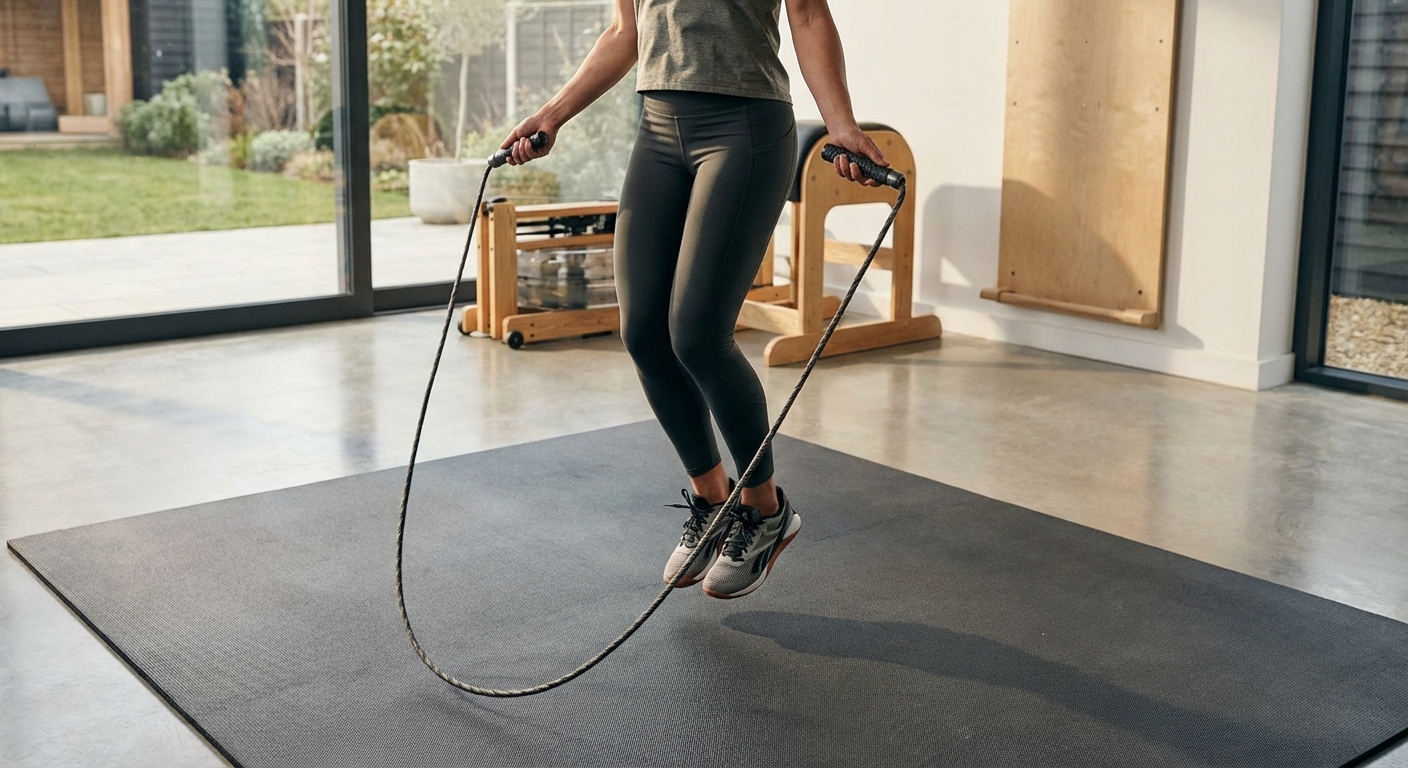
Weighted jump ropes are a unique hybrid of cardio and resistance training. Because they stimulate muscle protein synthesis in the upper body, recovery is just as important as the workout itself. When you swing a heavy rope, you are creating micro-tears in the muscle fibers of your deltoids and forearms. These fibers need time to repair and grow back stronger. If you jump every day, you interrupt this repair process, which can lead to muscle wasting and chronic fatigue rather than the "toned" look most users desire.
Sleep and nutrition play a massive role in how often you can jump. High-intensity weighted rope sessions deplete glycogen stores and tax the central nervous system (CNS). To maintain a frequency of 4 or 5 days a week, you must ensure you are consuming enough protein and carbohydrates to fuel recovery. Additionally, active recovery—such as light walking or stretching—on your non-jumping days can help flush out lactic acid and keep your joints mobile without adding further impact stress.
Another factor in recovery is the surface you choose to jump on. Jumping on concrete significantly increases the recovery time needed for your joints compared to jumping on a rubber gym mat or a wooden floor. If you find that you are consistently sore, try changing your environment before reducing your frequency. Using a mat can effectively "add" an extra workout day to your week by reducing the micro-trauma your bones and joints experience with every landing.
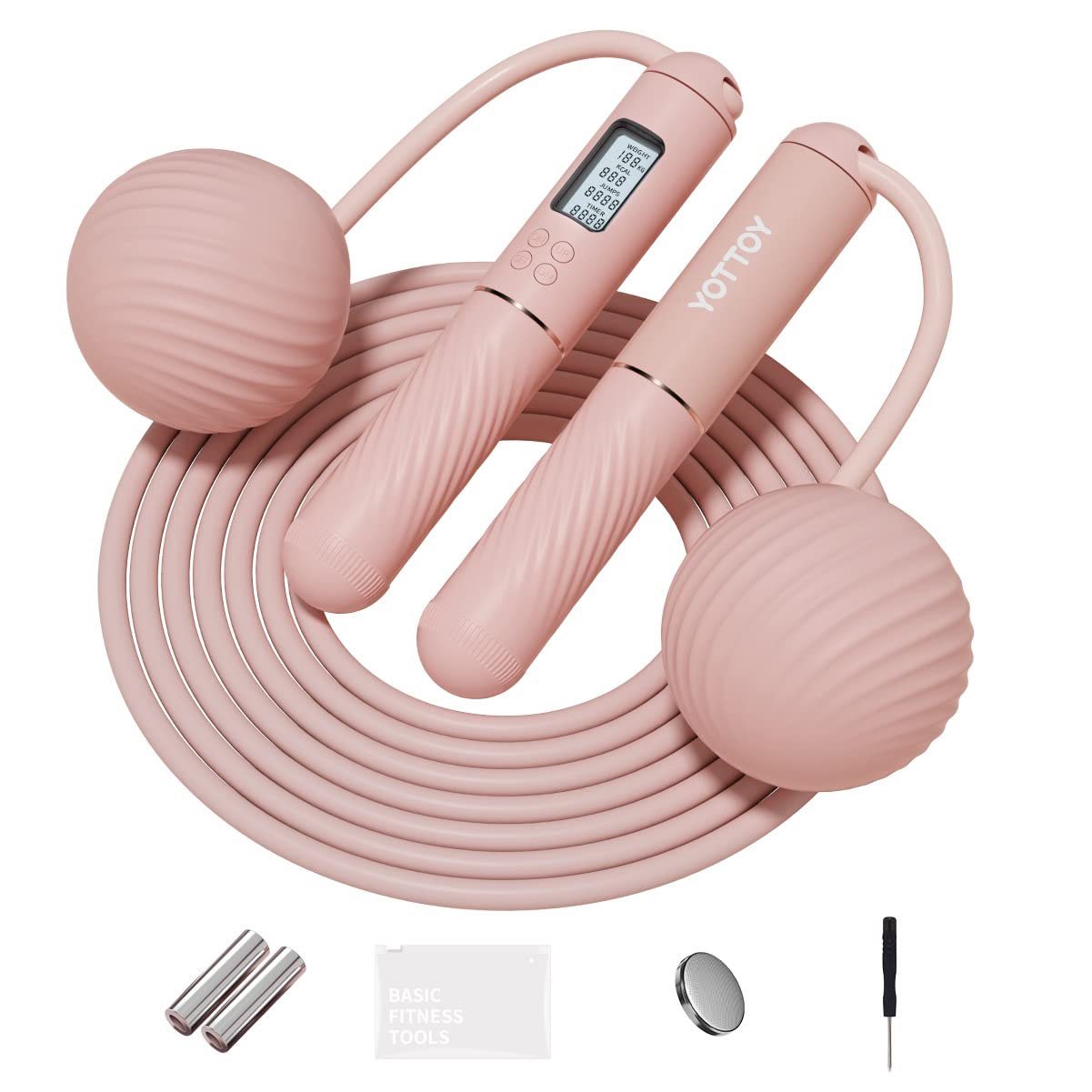
[YOTTOY Skipping Ropes for Adults -Cordless Counter Jump Rope with Large Cordless Ball-Weighted Jump Rope for Women with LCD Display Pink](https://www.amazon.com/dp/B0C5C477Q1?tag=swing-mass-20)
Rating: ⭐ 4.5/5 (1541 reviews)
Price: Check Website
- 1.YOTTOY Jump Rope: We are dedicated to developing high-quality lightweight sports products. Our Electric Jump Rope features an HD LED display that shows the Timer, Weight, Calorie, and Circles. Set your weight and track time, number of jumps, and calories burned to achieve your fitness goals more effectively.
- 2.Patented 2In 1 Design for Stability: Our innovative design includes a large cordless ball that ensures the rope won't easily fall. The external thread of the ball doubles as a massage ball, simulating the weight of a long rope for fitness and weight loss. Additionally, two removable counterweights enhance fat burning and accelerate sweating.
- 3.Faster and Smoother: Our speed jump rope incorporates premium 360-degree ball bearings, providing stable, fast, and tangle-free rotation. The adjustable steel rope with PVC protection guarantees durability and prevents cracking or breaking. Experience smooth jump exercises with our latest rope design.
The YOTTOY Skipping Rope is an excellent choice for users who want to maintain a high frequency but may be limited by their environment. I recommend it specifically for its 2-in-1 design, which includes a cordless ball option. This is perfect for those who want to get their jumps in at the office or in a small apartment without hitting the ceiling. The cordless balls simulate the weight of a long rope, allowing you to keep your rhythm and muscle engagement even when space is tight.
This rope is best for women and home-workout enthusiasts who value versatility. The handles feature removable counterweights, which is a fantastic feature for progressing your frequency; you can start light and add weight as your stamina improves. The LCD display tracks calories and circles, keeping you accountable. The only downside is that the cordless experience doesn't perfectly replicate the wrist-snap timing of a real cable, so purists might find it takes some getting used to. However, for sheer convenience and joint-friendly indoor sessions, it's hard to beat.
Advanced Training Volume: Pushing the Limits
Once you have 6 to 12 months of consistent weighted rope experience, your body will have adapted to the unique stresses of the sport. Advanced users can often handle 5 to 6 sessions per week, but this requires a sophisticated approach to "programming." You cannot jump with a 2-lb rope at maximum intensity six days a week without breaking down. Instead, advanced athletes use a method called undulating periodization, varying the weight and intensity of the rope each day.
An advanced weekly schedule might look like this: Monday is a heavy rope day (1.5 lbs+) for short, explosive intervals. Tuesday is a recovery day using a light speed rope for 30 minutes of steady-state cardio. Wednesday is a "medium" day with a 0.5-lb rope, focusing on footwork and double-unders. By rotating the weight of the rope, you distribute the stress across different energy systems and muscle groups, allowing for a higher total frequency without hitting a plateau or getting injured.
Advanced jumpers also need to pay close attention to their grip strength. The heavier the rope, the more your grip becomes the limiting factor. If your forearms are chronically tight, it can lead to elbow issues like "tennis elbow." Advanced training should always include dedicated mobility work for the wrists and shoulders to counteract the tightening effect of the heavy rotations. At this level, frequency is a tool for performance, but it must be managed with professional-level attention to body maintenance.
Common Mistakes and Pro Tips for Consistency
The most common mistake people make when trying to increase their jump rope frequency is ignoring their footwear. Many people try to jump in flat-soled "lifestyle" sneakers or, worse, barefoot on hard surfaces. To jump frequently, you need shoes with adequate forefoot cushioning. Since you should be landing on the balls of your feet, the cushioning in the front of the shoe is more important than the heel. Cross-training shoes are usually the best option as they provide lateral stability and impact protection.
Another pro tip is to incorporate a dynamic warm-up that focuses on the "ankles, wrists, and shoulders" trifecta. Before you even touch the rope, perform ankle circles, wrist rolls, and arm circles. This "greases the grooves" of the joints and increases the production of synovial fluid, which acts as a lubricant. A five-minute warm-up can be the difference between a productive session and a week-long layoff due to a strained muscle.
Finally, don't underestimate the power of "micro-sessions." If you find it hard to commit to 30 minutes three times a week, try jumping for 5 to 10 minutes every day with a medium-weight rope. For some, this "greasing the groove" approach is easier on the joints and better for building the habit of movement. However, if you choose this high-frequency, low-duration path, you must be even more diligent about monitoring for signs of overtraining.
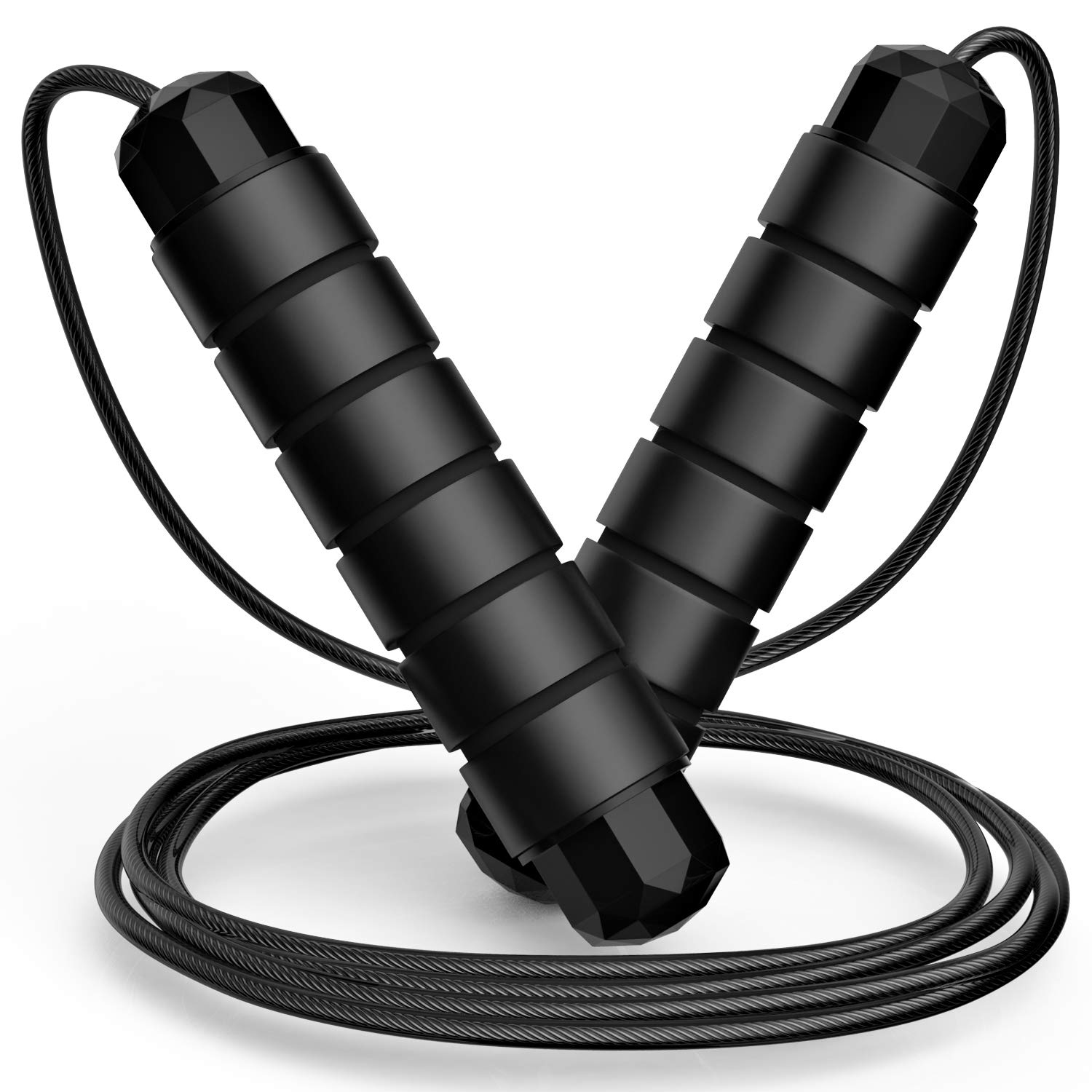
[Jump Rope, Tangle-Free Rapid Speed Jumping Rope Cable with Ball Bearings for Women, Men, and Kids, Adjustable Steel Jump Rope with Foam Handles for Home Gym Exercise Fitness Workout Equipment & Slim Body Black](https://www.amazon.com/dp/B09DF9NWC7?tag=swing-mass-20)
Rating: ⭐ 4.5/5 (22963 reviews)
Price: Check Website
- Durable & Adjustable Rope / / This jump rope is made of steel wires that are coated with strong PVC material, making it durable even after a long time exercising. Its adjustable length design enables you to customize the length according to your needs, making it suitable for everyone, no matter for kids or adults.
- Jump Fast, Jump Easily / / Built-in with high-quality ball bearings, the skipping rope provides you with comfortable jump exercises. It supports fast jumps while protecting you from any potential tangles, satisfying your needs for safety and convenience at the same time.
- Ergonomic Foam Handles / / The ergonomic handles are well designed for your safety and convenience: they are covered with soft sponges, which makes the handles comfortable to hold. And the non-slip & moisture-wicking features also keep your palms dry, making your every exercise comfortable and safe!
For those who want a reliable, no-frills tool to increase their workout frequency, the Tangle-Free Rapid Speed Rope is a staple. While it is categorized as a speed rope, its adjustable steel cable and ball-bearing system make it perfect for the "light days" in a weighted rope program. I recommend it because of its extreme durability and the comfortable foam handles that reduce hand fatigue during longer sessions.
This rope is best for beginners who are just testing their frequency limits or advanced jumpers who need a secondary rope for recovery days. The standout feature is the 360-degree ball bearings which ensure a smooth, tangle-free swing even at high speeds. One drawback is that it doesn't provide the heavy muscular load of a true weighted rope, so it won't build shoulder mass as effectively. However, its portability and ease of use make it the perfect "pocket" gym for staying consistent while traveling.
FAQ
Can I use a weighted jump rope every day? While it is physically possible for a highly conditioned athlete to jump every day, it is generally not recommended for the average fitness enthusiast. Weighted ropes place significant stress on the rotator cuffs and the lower leg bones. Jumping every day without rest can lead to cumulative fatigue, decreasing the quality of your workouts and increasing the risk of stress fractures. Most experts recommend a maximum of 5 days per week, ensuring at least two days are dedicated to full recovery or low-impact activity.
If you are determined to jump daily, you must vary the intensity. Use a heavy rope (1 lb+) only 2-3 times a week and stick to a very light rope or cordless balls on the other days. This "active recovery" approach allows you to keep the habit of jumping while giving your primary "power" muscles time to heal. Always listen to your body; if you feel a persistent ache that doesn't go away after a warm-up, it's a sign that your daily streak needs to end for the sake of long-term health.
How long should a weighted jump rope session last? Because of the high intensity, weighted jump rope sessions are typically shorter than standard cardio workouts. A 15 to 20-minute session is often plenty to achieve a high caloric burn and muscle stimulus. If you are using a very heavy rope (2 lbs or more), even 10 minutes of interval training can be sufficient. The goal is to maintain high intensity and proper form; once your shoulders fatigue to the point that your posture slumps, the session should end.
For those focusing on weight loss, you can extend the session by mixing jumping with bodyweight exercises. For example, jump for 2 minutes, then do 20 air squats or a 1-minute plank. This allows your "jumping muscles" to rest while keeping your heart rate elevated. This circuit-style training is often more effective and safer than trying to jump continuously for 30+ minutes with a heavy rope.
Will weighted jump ropes make my shoulders too bulky? Weighted jump ropes will certainly develop your shoulders, but they are unlikely to make you "bulky" in the way heavy bodybuilding-style lifting does. Instead, they produce a lean, athletic, and "sculpted" look. The resistance provided by the rope is dynamic and focuses on endurance-strength rather than pure hypertrophy. You will see improved definition in the lateral and posterior deltoids, as well as the forearms and trapezius muscles.
For women or men who are worried about excessive size, the key is to focus on higher repetitions with a medium-weight rope (0.5 lb to 1 lb) rather than very heavy ropes. This builds muscular endurance and tone without the same level of muscle fiber thickness associated with heavy resistance. Regardless of the rope weight, the caloric burn of jumping usually helps maintain a lean physique that highlights muscle definition rather than bulk.
Is it better to jump for time or for repetitions? For beginners, jumping for time is often more effective because it takes the pressure off "hitting a number" while you are still learning the rhythm. Setting a timer for 10 minutes and simply doing your best allows you to focus on form. As you become more advanced, switching to repetition goals (e.g., 1,000 jumps) can help you track progress and increase the density of your workouts.
Weighted ropes are particularly well-suited for "EMOM" (Every Minute on the Minute) workouts. For example, do 50 jumps at the start of every minute for 15 minutes. This combines the benefits of both time and reps, providing a structured way to increase your frequency and volume over time. Using a smart rope like the SJ600 can automate this tracking, making it easier to see your "reps per minute" improve over several weeks.
What are the first signs that I am jumping too often? The most common early warning sign of overtraining is "morning stiffness" in the Achilles tendon or the arches of the feet. If you find yourself limping for the first few steps after waking up, you are likely jumping too much or on a surface that is too hard. Another sign is a decrease in "pop" or vertical height; if your legs feel "heavy" and you are tripping over the rope more than usual, your central nervous system is likely fatigued.
You should also watch for persistent soreness in the front of the shoulder or the elbow. Because weighted ropes require a strong grip and stable shoulder, these joints can develop tendonitis if not given enough rest. If you notice a dull ache that persists even when you aren't working out, it's time to take a full week off and reassess your frequency and equipment.
Our Top Picks for 2026
We've spent hours researching and testing to find the absolute best options currently available.
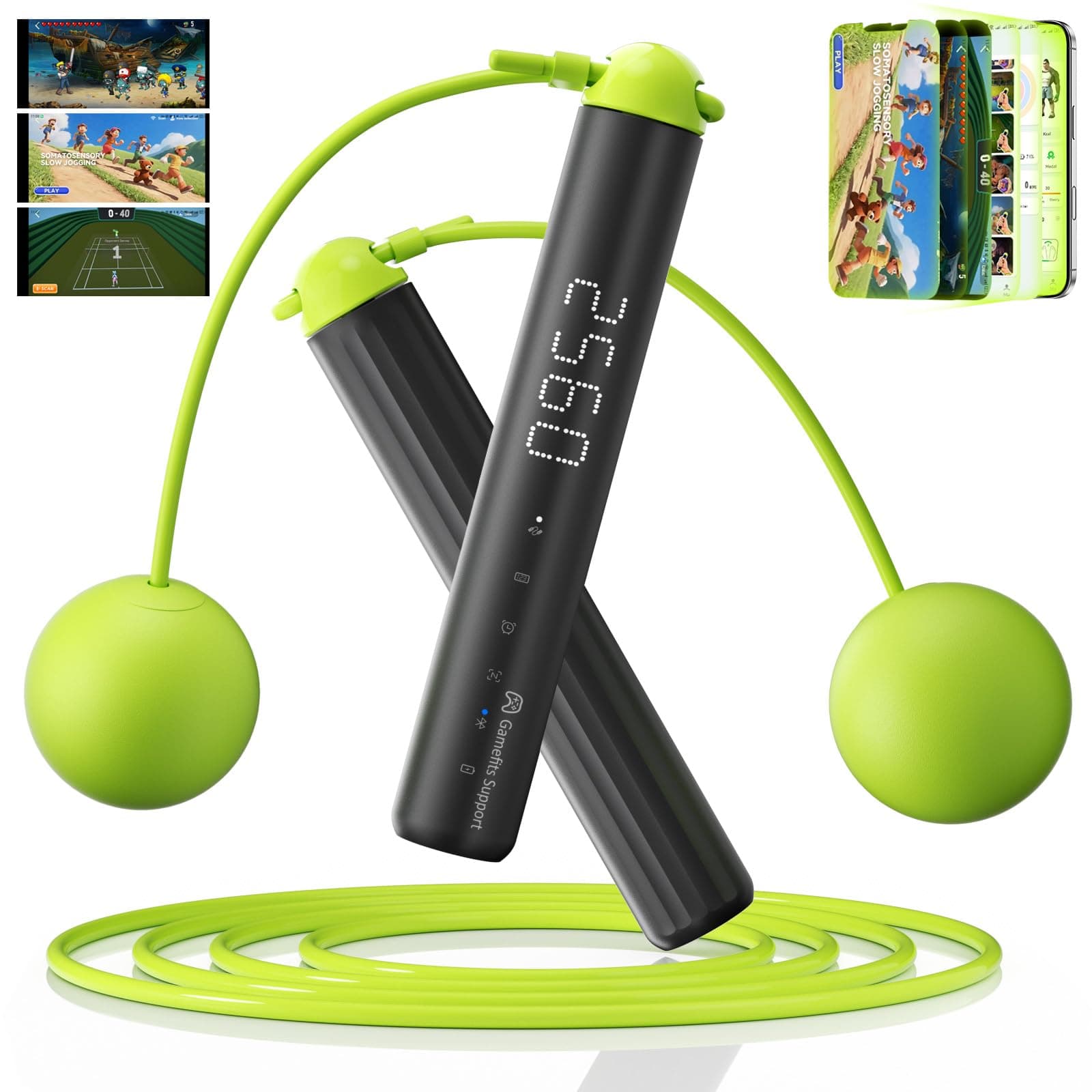
Smart Jump Rope with 9-Axis Gyroscope,Wireless Jumping Rope,Supports Somatosensory Games Real-time Data Tracking via App,Fitness Jump Rope for Kids and Adults Ideal for Home or Gym SJ600
- [Motion-sensing games]:Equipped with a high-precision nine-axis gyroscope, it accurately detects every jump and captures movement trajectories in real time, delivering more responsive and fluid motion feedback. Experience a wide range of interactive motion games that transform fitness into an enjoyable gaming experience
- [Three Exercise Modes]:Easily switch between freestyle, counting, and timed modes to achieve your fitness goals. Track the number and duration of jumps or focus on freestyle training for maximum flexibility
- [APP Data Analysis]: The app tracks jump rope counts, duration, and calories burned in real time, generating visual charts to guide users in scientific training. It records historical data, allows goal setting and reminders, helps users understand training trends, and continuously improves athletic performance
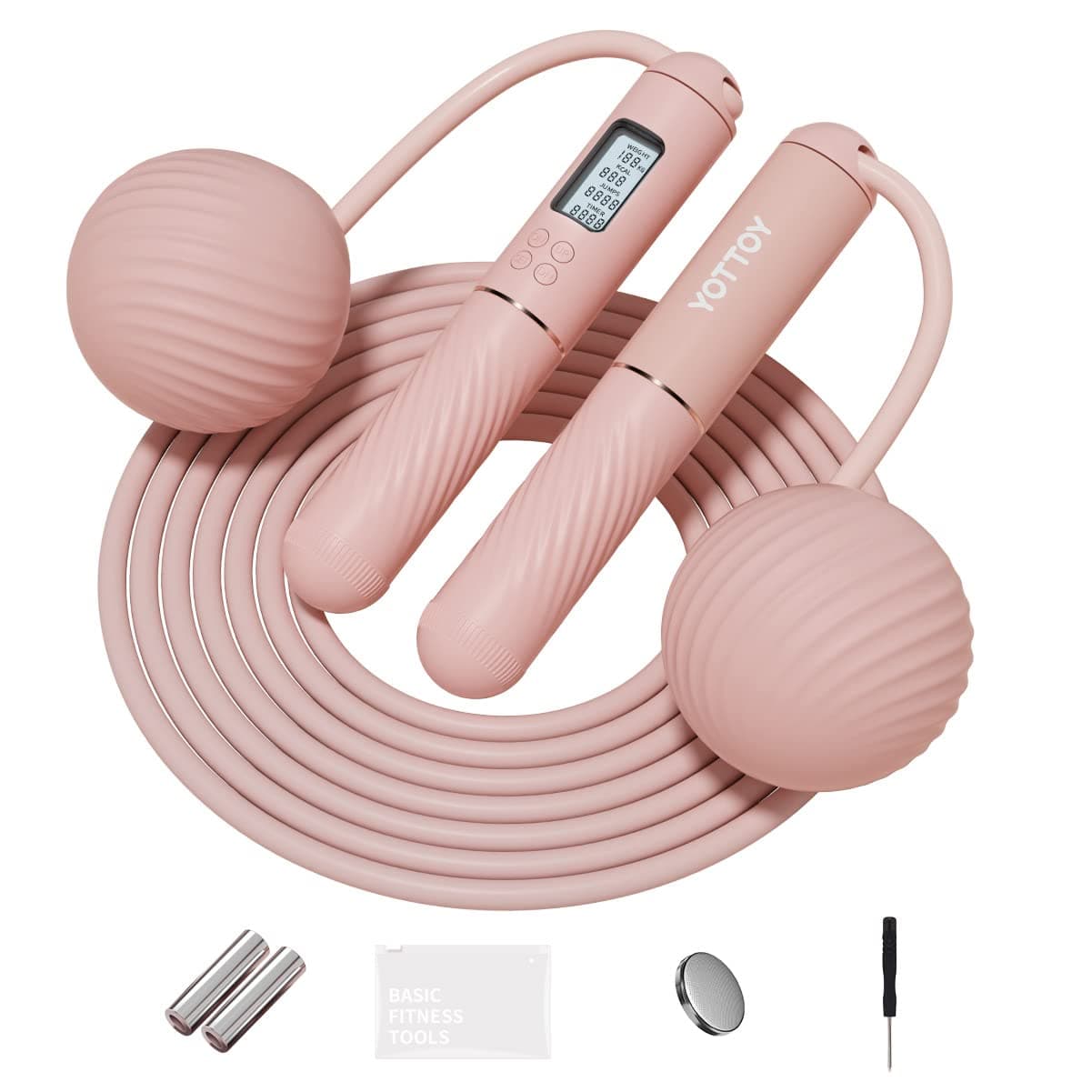
YOTTOY Skipping Ropes for Adults -Cordless Counter Jump Rope with Large Cordless Ball-Weighted Jump Rope for Women with LCD Display Pink
- 1.YOTTOY Jump Rope: We are dedicated to developing high-quality lightweight sports products. Our Electric Jump Rope features an HD LED display that shows the Timer, Weight, Calorie, and Circles. Set your weight and track time, number of jumps, and calories burned to achieve your fitness goals more effectively.
- 2.Patented 2In 1 Design for Stability: Our innovative design includes a large cordless ball that ensures the rope won't easily fall. The external thread of the ball doubles as a massage ball, simulating the weight of a long rope for fitness and weight loss. Additionally, two removable counterweights enhance fat burning and accelerate sweating.
- 3.Faster and Smoother: Our speed jump rope incorporates premium 360-degree ball bearings, providing stable, fast, and tangle-free rotation. The adjustable steel rope with PVC protection guarantees durability and prevents cracking or breaking. Experience smooth jump exercises with our latest rope design.
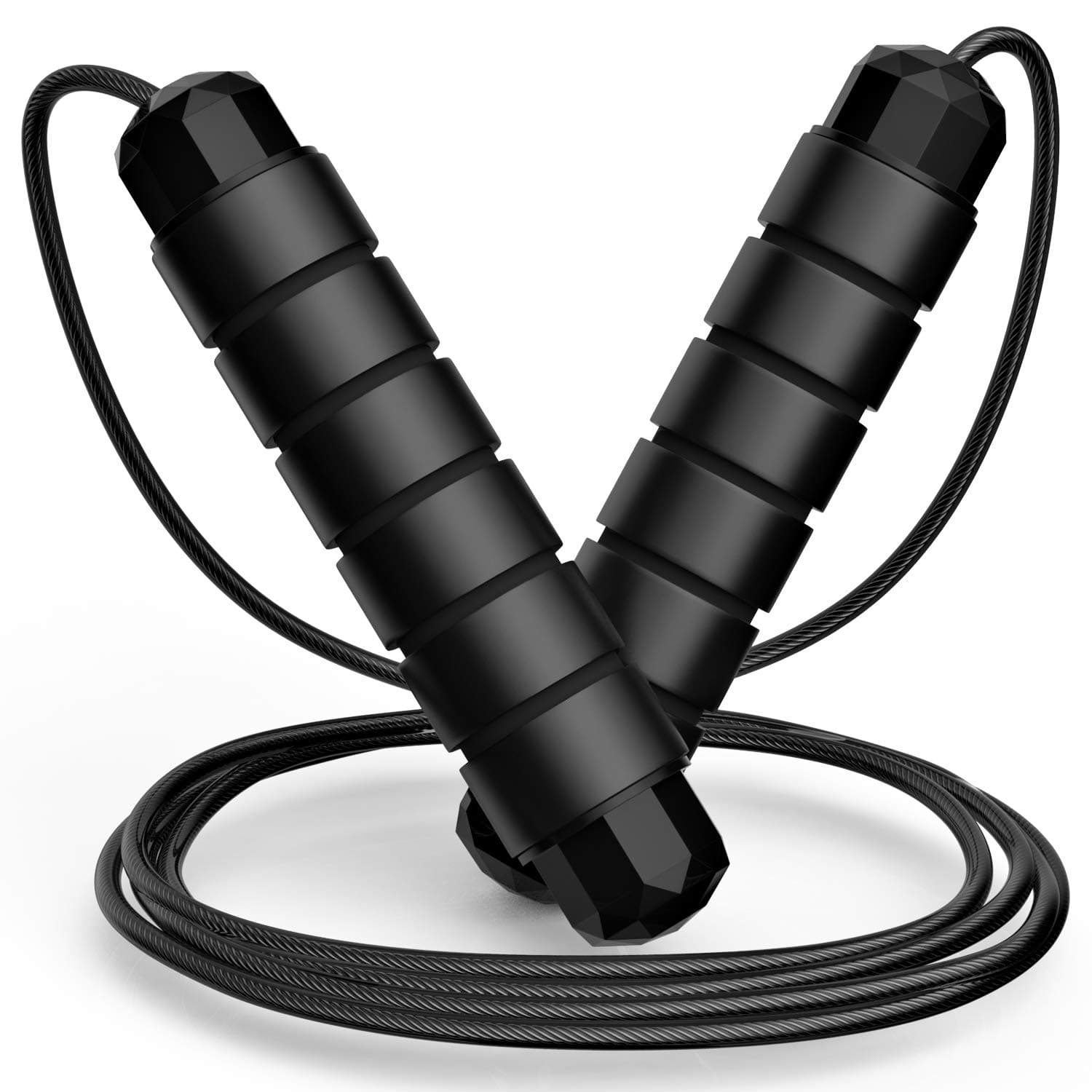
Jump Rope, Tangle-Free Rapid Speed Jumping Rope Cable with Ball Bearings for Women, Men, and Kids, Adjustable Steel Jump Rope with Foam Handles for Home Gym Exercise Fitness Workout Equipment & Slim Body Black
- Durable & Adjustable Rope / / This jump rope is made of steel wires that are coated with strong PVC material, making it durable even after a long time exercising. Its adjustable length design enables you to customize the length according to your needs, making it suitable for everyone, no matter for kids or adults.
- Jump Fast, Jump Easily / / Built-in with high-quality ball bearings, the skipping rope provides you with comfortable jump exercises. It supports fast jumps while protecting you from any potential tangles, satisfying your needs for safety and convenience at the same time.
- Ergonomic Foam Handles / / The ergonomic handles are well designed for your safety and convenience: they are covered with soft sponges, which makes the handles comfortable to hold. And the non-slip & moisture-wicking features also keep your palms dry, making your every exercise comfortable and safe!