
Weighted Jump Rope vs. Running: Which Wins?

Table of Contents
- The Great Cardio Debate: Jump Rope vs. Running
- Caloric Burn: Which Torches More Fat?
- Muscular Engagement and Full-Body Toning
- Impact and Joint Longevity: Protecting Your Knees
- Convenience and Portability in Fitness
- Mental Engagement and Skill Development
- Tips, Tricks, and Common Mistakes
- Frequently Asked Questions
The Great Cardio Debate: Jump Rope vs. Running
For decades, running has been the undisputed king of cardiovascular exercise. Whether it’s a morning jog through the park or a grueling marathon, the image of the runner is synonymous with peak fitness. However, in recent years, a challenger has emerged from the boxing gyms and CrossFit boxes to claim the throne: the weighted jump rope. This isn't just child's play; it is a high-intensity, full-body workout that promises to deliver better results in less time. If you’re looking to maximize your sweat equity, choosing between these two can be a difficult decision.
The core of the debate lies in efficiency. Most people struggle to find an hour every day to dedicate to the pavement. Running requires specific weather conditions, the right terrain, and a significant time commitment to see real physiological changes. On the other hand, jumping rope—especially with weighted handles or cables—offers a concentrated burst of activity that engages more muscle groups simultaneously. In this guide, we will break down the science, the impact, and the practicalities of both exercises to help you decide which one deserves a spot in your daily routine.
Ultimately, the "winner" depends on your personal goals, your physical condition, and your lifestyle. Are you training for endurance, or are you looking to shred body fat while building lean muscle? Are you prone to shin splints, or do you find the rhythmic "thwack" of a rope more meditative than the steady pace of a treadmill? By the end of this article, you’ll have a clear understanding of how these two powerhouses compare and how to integrate them for the ultimate fitness transformation.

Caloric Burn: Which Torches More Fat?
When it comes to pure caloric expenditure, the jump rope often holds a slight edge over running, particularly when intensity is factored in. According to various fitness studies, jumping rope at a moderate pace can burn between 10 to 16 calories per minute. If you increase that pace to 120 RPM (revolutions per minute), you are looking at a burn rate that rivals a 6-minute mile pace in running. For most people, maintaining a 6-minute mile is an elite-level feat, whereas reaching a high intensity on a jump rope is achievable with just a few weeks of practice.
The magic of the jump rope, particularly the weighted variety, lies in the "Afterburn Effect" or Excess Post-exercise Oxygen Consumption (EPOC). Because jumping rope is inherently an interval-based activity, it keeps your heart rate spiked and forces your body to work harder to recover post-workout. Running can achieve this through sprints, but steady-state jogging typically results in a lower EPOC compared to the high-intensity nature of a skipping session. If your goal is weight loss, the efficiency of the rope allows you to achieve in 15 minutes what might take 30 to 45 minutes on a jogging trail.
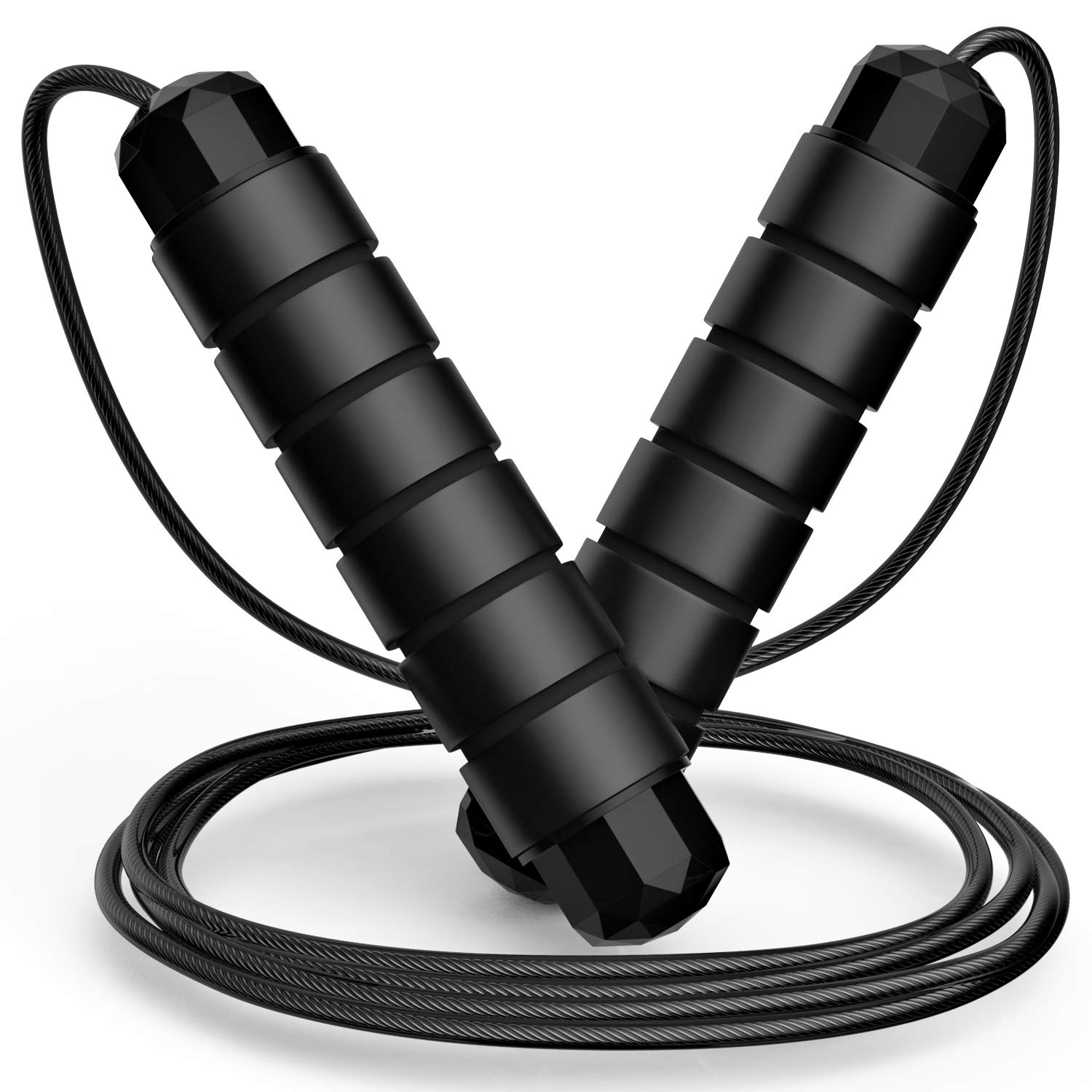
[Jump Rope, Tangle-Free Rapid Speed Jumping Rope Cable with Ball Bearings for Women, Men, and Kids, Adjustable Steel Jump Rope with Foam Handles for Home Gym Exercise Fitness Workout Equipment & Slim Body Black](https://www.amazon.com/dp/B09DF9NWC7?tag=swing-mass-20)
Rating: ⭐ 4.5/5 (22963 reviews)
Price: Check Website
- Durable & Adjustable Rope / / This jump rope is made of steel wires that are coated with strong PVC material, making it durable even after a long time exercising. Its adjustable length design enables you to customize the length according to your needs, making it suitable for everyone, no matter for kids or adults.
- Jump Fast, Jump Easily / / Built-in with high-quality ball bearings, the skipping rope provides you with comfortable jump exercises. It supports fast jumps while protecting you from any potential tangles, satisfying your needs for safety and convenience at the same time.
- Ergonomic Foam Handles / / The ergonomic handles are well designed for your safety and convenience: they are covered with soft sponges, which makes the handles comfortable to hold. And the non-slip & moisture-wicking features also keep your palms dry, making your every exercise comfortable and safe!
I highly recommend the Tangle-Free Rapid Speed Jumping Rope for anyone looking to transition from running to jumping without the frustration of equipment failure. This rope is the "gold standard" for beginners and intermediate jumpers alike because of its incredible durability and smooth rotation. It’s best for those who want a reliable, no-frills tool that won't snap after a month of use on a garage floor.
The standout feature is the high-quality ball bearing system integrated into the handles. Unlike cheaper ropes that tug or catch, this mechanism allows for a seamless, 360-degree rotation that supports high-speed intervals. The PVC-coated steel cable is also a major plus, providing enough weight to feel the rope's arc without being overly taxing on the forearms. One minor drawback is that the foam handles, while comfortable and moisture-wicking, can eventually show wear if you have a death grip during intense sessions. Compared to standard plastic ropes, this model offers a much more professional feel that encourages longer workout durations.
Muscular Engagement and Full-Body Toning
Running is primarily a lower-body exercise. While it certainly strengthens the heart and lungs, the muscular engagement is largely limited to the quads, hamstrings, glutes, and calves. There is some core activation required for stability, but the upper body remains relatively passive. This can lead to a "runner's physique," which is lean but often lacks significant muscle definition in the shoulders, arms, and back. If your goal is a balanced, toned look, running usually needs to be supplemented with resistance training.
Jump rope, conversely, is a true full-body workout. Every time you swing the rope, your forearms, deltoids, and brachialis are engaged to maintain the rotation. Your core must remain tight to stabilize your spine against the vertical impact, and your calves are under constant tension as they act as springs. When you introduce a weighted rope into the mix, the resistance increases exponentially. You aren't just doing cardio; you are performing a low-load, high-repetition strength workout that carves out shoulder definition and strengthens the "posterior chain."
Furthermore, the coordination required for jumping rope forces the brain and muscles to communicate more effectively. This neuromuscular adaptation is something you don't get from the repetitive motion of running. You are building "functional" muscle—the kind that helps with balance, agility, and explosive power. For athletes in sports like boxing, basketball, or tennis, the muscular benefits of jumping rope far outweigh those of distance running because it mimics the quick, light-on-your-feet movements required in competition.
Impact and Joint Longevity: Protecting Your Knees
A common misconception is that jumping rope is harder on the joints than running. In reality, the opposite is often true when proper technique is applied. When you run, each stride involves a significant "flight phase" followed by a landing that can exert a force of up to 3 to 4 times your body weight on a single leg. This impact is absorbed primarily by the heels, knees, and lower back, which is why "runner’s knee" and shin splints are so prevalent in the community. Over time, this repetitive pounding on hard pavement can lead to chronic joint issues.
Jumping rope, when done correctly, is a low-impact activity. The key is that you are only jumping an inch or two off the ground and landing on the balls of your feet. This allows the calves and the arch of the foot to act as natural shock absorbers, distributing the force much more evenly than a heel-strike in running. Because you are jumping with both feet (or alternating quickly), the load is shared, and the vertical displacement is minimal. This makes it a safer alternative for individuals who want high-intensity cardio but have a history of minor joint pain.
However, the surface matters immensely. Jumping on concrete is a recipe for disaster, just as running on concrete is. To maximize the joint-saving benefits of the rope, it is recommended to use a rubber mat or a wooden floor. These surfaces provide "give" that further reduces the stress on your skeletal system. If you are worried about the impact, you can even look into cordless options that allow you to focus on the movement without the risk of tripping, which is where modern fitness technology comes into play.
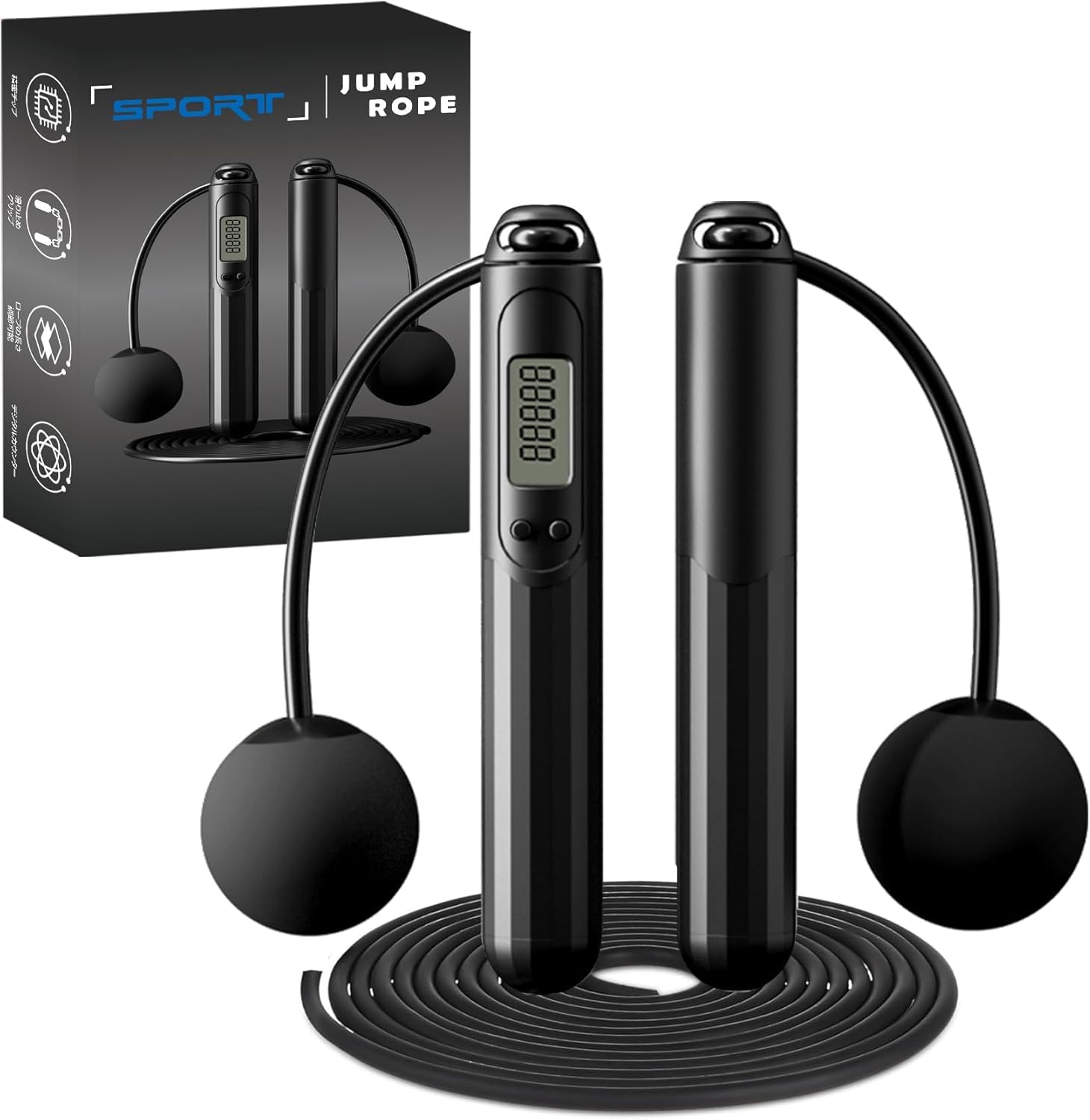
[Jump Rope with Counter - 2-in-1 Weighted Corded & Cordless Skipping Rope with LCD Display, Cordless jump rope,Adjustable Length Steel Ball Bearings Jumping Rope for Adults Fitness, Home Gym Workout](https://www.amazon.com/dp/B0FPGG6T46?tag=swing-mass-20)
Rating: ⭐ 4.6/5 (30 reviews)
Price: Check Website
- 🔥 2-in-1 Jump Rope with Counter: Cordless & Wired Modes Switch seamlessly between weighted ball cordless skipping for rhythm training and traditional wired jumping for speed. Perfect for HIIT, boxing, gym, or outdoor cardio – one rope adapts to all workouts!
- 💪 Weighted Ball Design for Smooth, Wobble-Free Rhythm Steel ball bearings in each handle ensure balanced rotation and prevent tangling, while non-slip ergonomic grips fit all hand sizes (kids 6+ to adults). Sweat-proof even during intense sessions!
- 📊 LED Display Tracks Jumps, Time Smart counter with LCD screen auto-records every jump, workout duration. Syncs like a personal trainer – see real-time progress without stopping!
The 2-in-1 Weighted Corded & Cordless Skipping Rope is a game-changer for people with limited space or joint concerns. I recommend this product specifically for home-office workers or those living in apartments with low ceilings. It’s best for users who want the benefits of a weighted workout without the "thumping" sound of a long rope hitting the floor or the risk of knocking over a lamp.
The standout feature is the versatility. You can switch from a traditional 9-foot steel cable to weighted cordless balls in seconds. The cordless mode is surprisingly effective; the weighted balls provide enough centrifugal force to mimic the feeling of a real rope, ensuring your shoulders and forearms still get a serious workout. The built-in LCD counter is another highlight, accurately tracking your jumps and time so you don't have to count in your head. One consideration is that the "weighted" aspect comes more from the balls than the handles, which might feel different to traditionalists. However, its ability to provide a "10 minutes = 30 minutes running" efficiency makes it a top contender for busy professionals.
Convenience and Portability in Fitness
One of the biggest hurdles to a consistent workout routine is "friction"—the amount of effort it takes to actually start the exercise. Running has relatively low friction, but it still requires you to leave your house, find a suitable path, and hope the weather cooperates. If it's raining, snowing, or excessively hot, the likelihood of skipping a run increases. Additionally, running in unfamiliar areas while traveling can be a safety concern or simply a logistical headache.
The jump rope is the ultimate "no-excuses" tool. It fits into a backpack, a carry-on, or even a large pocket. You can jump in a hotel room, a garage, a park, or a small corner of a gym. It requires roughly a 4x4 foot space, making it the most portable piece of high-intensity equipment in existence. This convenience means you can squeeze in a workout during a lunch break or while waiting for dinner to cook. In the "Weighted Jump Rope vs. Running" battle, the rope wins the convenience round by a landslide.
Moreover, the advent of "smart" jump ropes has closed the data gap that used to favor running. Runners have long relied on GPS watches to track pace, distance, and heart rate. Today, smart ropes provide real-time feedback on jump count, calories burned, and even "trip" frequency. This data integration turns a simple piece of cord into a high-tech training partner that keeps you motivated through gamification and progress tracking.
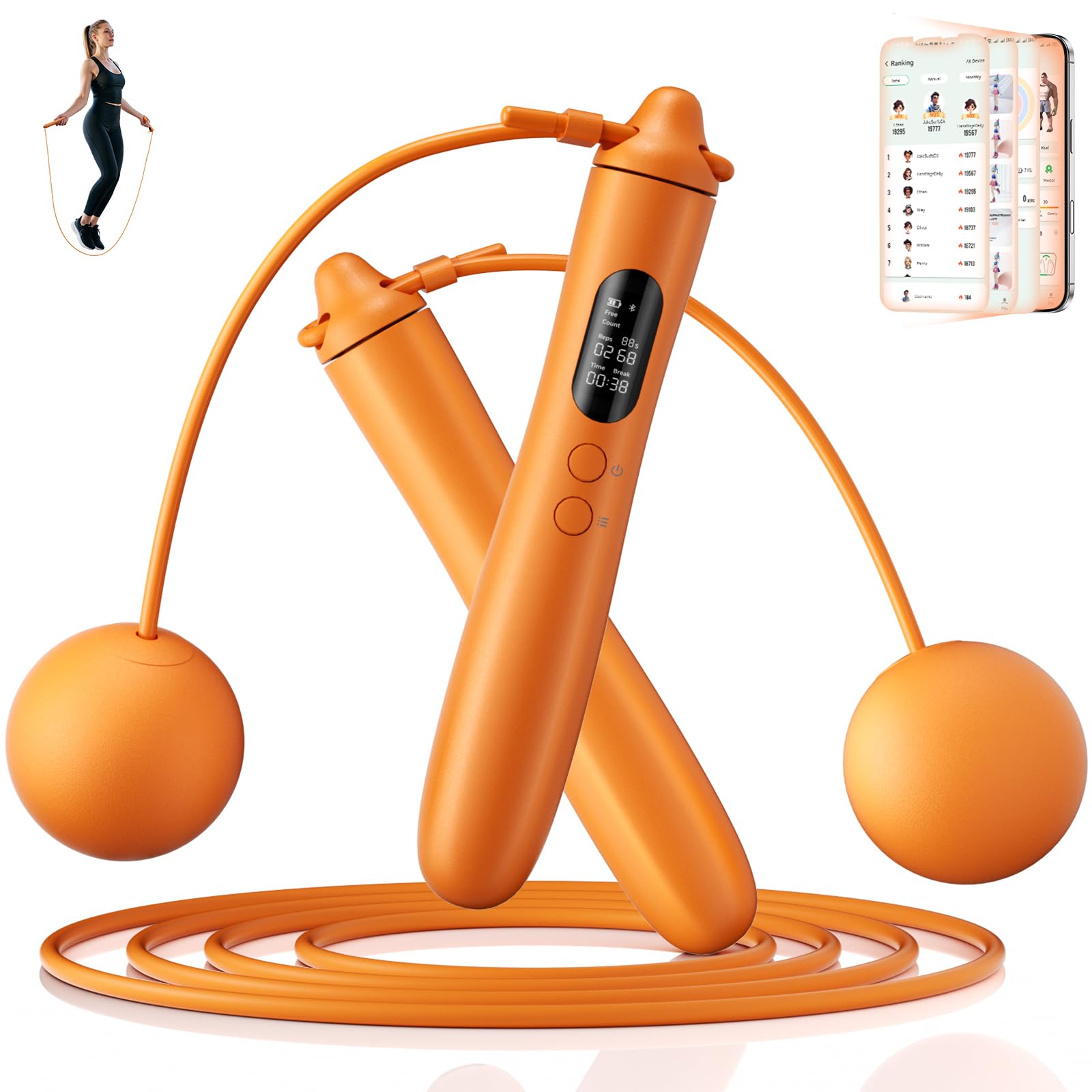
[Smart Jump Rope with 9-Axis Gyroscope,Wireless Jumping Rope,Supports Somatosensory Games Real-time Data Tracking via App,Fitness Jump Rope for Kids and Adults Ideal for Home or Gym SJ100X](https://www.amazon.com/dp/B0FRDZQ31F?tag=swing-mass-20)
Rating: ⭐ 4.2/5 (7 reviews)
Price: Check Website
- Smart Bluetooth and App Connectivity: LVPIMAN jump rope connects to your smartphone via Bluetooth, letting you enjoy multiple built-in games and interactive fitness fun. Make every jump count
- Three Exercise Modes:Easily switch between freestyle, counting, and timed modes to achieve your fitness goals. Track the number and duration of jumps or focus on freestyle training for maximum flexibility
- Calorie Tracking and Fitness Monitoring:Automatically calculate calorie burn for each workout, track data, and analyze your workouts. Accurate metrics help you monitor your weight loss and fitness progress
If you are a data-driven athlete who loves the tracking capabilities of a running watch, the Smart Jump Rope with 9-Axis Gyroscope is the choice for you. I recommend this for the "techy" fitness enthusiast who needs more than just a rope to stay engaged. It’s best for those who enjoy competing against their own personal bests or participating in app-based challenges.
The standout feature is the 9-axis gyroscope combined with Bluetooth connectivity. This isn't just a simple click-counter; it tracks the smoothness and speed of your rotations with incredible accuracy. The app integration allows for "Somatosensory Games," which makes the workout feel less like a chore and more like an interactive experience. The battery life is also impressive, offering 13 hours of active use. The main drawback is the learning curve associated with the app, and some users might find the screen mirroring to a TV a bit overkill. However, compared to a basic rope, the feedback loop provided by this smart device can significantly accelerate your progress.
Mental Engagement and Skill Development
Running is often praised for its meditative qualities—the "runner's high" and the ability to zone out. While this is great for stress relief, it can also lead to boredom. Many people find that after 20 minutes on a treadmill or the same neighborhood loop, their mind begins to wander, and the workout feels like a drag. Running is a repetitive, linear movement that doesn't require much cognitive load once you find your rhythm.
Jumping rope is an active skill. You cannot "zone out" while skipping, or you will likely trip over the rope. It requires a high level of focus, rhythm, and timing. This mental engagement makes the time pass much faster for many people. As you progress, you can learn new skills like "double unders," "cross-overs," or "side swings." This sense of progression provides a dopamine hit that running rarely offers outside of hitting a new distance or time PR.
Furthermore, the coordination developed through jump rope has "carry-over" to other parts of your life. It improves your proprioception (awareness of your body in space) and your reaction time. For older adults, this can be a vital tool for fall prevention. For younger athletes, it builds the foundational "quick feet" necessary for almost any sport. While running builds grit, jumping rope builds grace and athleticism.
Tips, Tricks, and Common Mistakes
To get the most out of your jump rope sessions and avoid the pitfalls common to beginners, you must focus on form. The most frequent mistake is jumping too high and tucking the knees. You only need to clear the rope, which is usually less than an inch thick. Keep your jumps small and stay on the balls of your feet. Your heels should barely touch the ground, if at all. This "pogo-stick" motion is what protects your joints and allows for the high-speed rotations that burn the most calories.
Another critical tip is handle placement. Beginners often swing their entire arms from the shoulders, which leads to early fatigue and a tangled rope. Instead, keep your elbows tucked close to your ribs and use your wrists to generate the rotation. Think of it like stirring a small pot of water with a spoon. The movement should be efficient and localized. If you find the rope is hitting your feet, check your arm extension; as you get tired, your arms tend to drift outward, which shortens the arc of the rope and causes trips.
Finally, don't ignore the importance of a warm-up. Because jumping rope is high-intensity from the first second, your calves and Achilles tendons need to be primed. Spend five minutes doing dynamic stretches, such as ankle circles, calf raises, and light jogging in place. If you are using a weighted rope, pay extra attention to your shoulders and wrists. Starting cold is the fastest way to develop tendonitis or a calf strain, which will put you on the sidelines regardless of whether you prefer jumping or running.
FAQ
1. Is jumping rope better for losing belly fat than running? Jumping rope can be more effective for overall fat loss, including belly fat, because it typically maintains a higher intensity and engages more muscle groups. Belly fat reduction is primarily a result of a caloric deficit, and since jumping rope can burn more calories in a shorter period, it helps reach that deficit faster. Additionally, the core engagement required to stabilize your body during jumps provides a toning effect that running lacks.
However, it’s important to remember that you cannot "spot reduce" fat. To lose belly fat, you need a consistent routine that combines high-intensity cardio with a healthy diet. The jump rope’s ability to trigger a higher EPOC (afterburn) means your body continues to burn calories at an elevated rate even after you've finished your workout, which is a significant advantage in any weight loss journey.
2. Can I jump rope every day, or do I need rest days like with running? While you can jump rope frequently, jumping every day—especially as a beginner—is generally not recommended. Just like running, jumping rope is a repetitive stress activity. Your bones, tendons, and muscles need time to adapt to the impact. Starting with 3 to 4 days a week and allowing 48 hours between intense sessions is a safer approach to prevent overuse injuries like shin splints or stress fractures.
As your conditioning improves and your "tissues" become more resilient, you can increase the frequency. Many advanced jumpers skip 5 to 6 days a week without issue. The key is to listen to your body; if you feel persistent aching in your shins or arches, take a break. Incorporating "low-impact" days where you use a cordless rope or focus on slow, rhythmic jumping can also help you maintain the habit without overtaxing your joints.
3. Which is better for building cardiovascular endurance? Both are excellent, but they build endurance in slightly different ways. Running is superior for "aerobic" endurance—the ability to maintain a moderate level of effort for a very long time (e.g., an hour-long run). It trains the heart to pump blood efficiently over long distances. If your goal is to run a 10K or a marathon, there is no substitute for putting in the miles on the road.
Jumping rope is often better for "anaerobic" endurance and cardiovascular "power." It trains your heart to recover quickly from high-intensity bursts. This is why it’s the preferred cardio for boxers and MMA fighters who need to be explosive for 3-minute rounds. If you want to improve your overall fitness and "gas tank" for daily life and sports, the jump rope offers a more time-efficient way to strengthen your heart and lungs.
4. How do I choose the right rope length? Choosing the right length is crucial for preventing trips and maintaining good form. A general rule of thumb is to stand on the center of the rope with one foot and pull the handles upward. For beginners, the tips of the handles should reach your armpits. As you become more experienced and your form improves, you may want to shorten the rope so the handles reach your mid-chest, which allows for faster rotations and less wasted movement.
Most modern ropes, like the ones mentioned in this article, come with adjustable cables. This is a vital feature because it allows you to fine-tune the length as your skill level evolves. Avoid ropes that require permanent cutting until you are absolutely sure of your preferred length. A rope that is too long will drag on the ground and slow you down, while a rope that is too short will force you to crouch or trip your feet.
5. Can I replace running entirely with jumping rope? Yes, you can absolutely replace running with jumping rope and maintain (or even improve) your fitness levels. Because the jump rope provides a similar cardiovascular stimulus with added upper-body engagement and better caloric efficiency, it is a perfectly viable primary cardio source. Many people make the switch because of time constraints, weather issues, or joint pain associated with running.
However, many fitness experts recommend a hybrid approach. Running provides a unique mental release and a different type of leg conditioning, while jumping rope offers intensity and coordination. If you enjoy both, try alternating days: run on the weekends when you have more time to enjoy the scenery, and jump rope during the week when you need a quick, 20-minute blast of exercise. This variety prevents boredom and ensures a well-rounded athletic profile.
Our Top Picks for 2026
We've spent hours researching and testing to find the absolute best options currently available.
Jump Rope, Tangle-Free Rapid Speed Jumping Rope Cable with Ball Bearings for Women, Men, and Kids, Adjustable Steel Jump Rope with Foam Handles for Home Gym Exercise Fitness Workout Equipment & Slim Body Black
- Durable & Adjustable Rope / / This jump rope is made of steel wires that are coated with strong PVC material, making it durable even after a long time exercising. Its adjustable length design enables you to customize the length according to your needs, making it suitable for everyone, no matter for kids or adults.
- Jump Fast, Jump Easily / / Built-in with high-quality ball bearings, the skipping rope provides you with comfortable jump exercises. It supports fast jumps while protecting you from any potential tangles, satisfying your needs for safety and convenience at the same time.
- Ergonomic Foam Handles / / The ergonomic handles are well designed for your safety and convenience: they are covered with soft sponges, which makes the handles comfortable to hold. And the non-slip & moisture-wicking features also keep your palms dry, making your every exercise comfortable and safe!
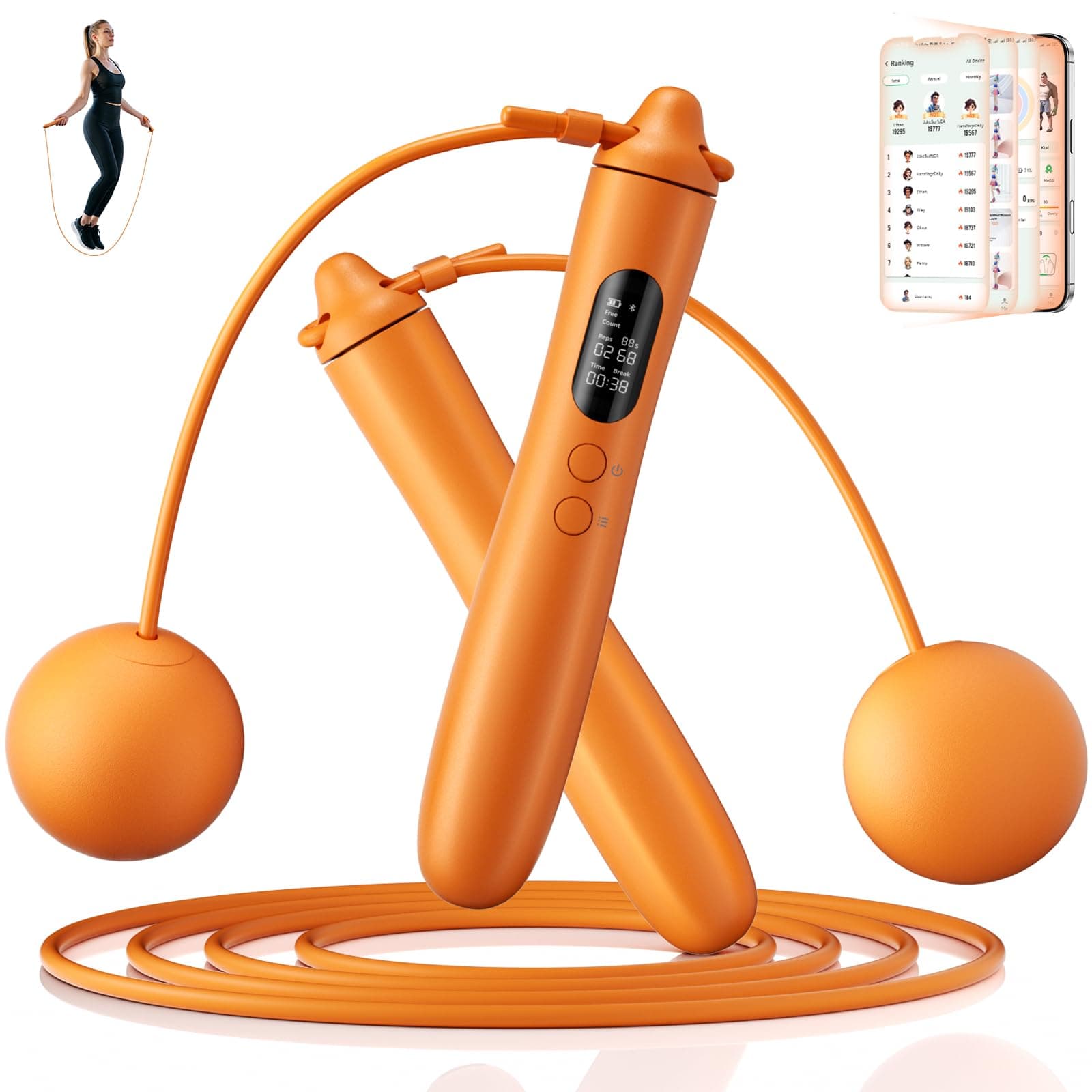
Smart Jump Rope with 9-Axis Gyroscope,Wireless Jumping Rope,Supports Somatosensory Games Real-time Data Tracking via App,Fitness Jump Rope for Kids and Adults Ideal for Home or Gym SJ100X
- Smart Bluetooth and App Connectivity: LVPIMAN jump rope connects to your smartphone via Bluetooth, letting you enjoy multiple built-in games and interactive fitness fun. Make every jump count
- Three Exercise Modes:Easily switch between freestyle, counting, and timed modes to achieve your fitness goals. Track the number and duration of jumps or focus on freestyle training for maximum flexibility
- Calorie Tracking and Fitness Monitoring:Automatically calculate calorie burn for each workout, track data, and analyze your workouts. Accurate metrics help you monitor your weight loss and fitness progress
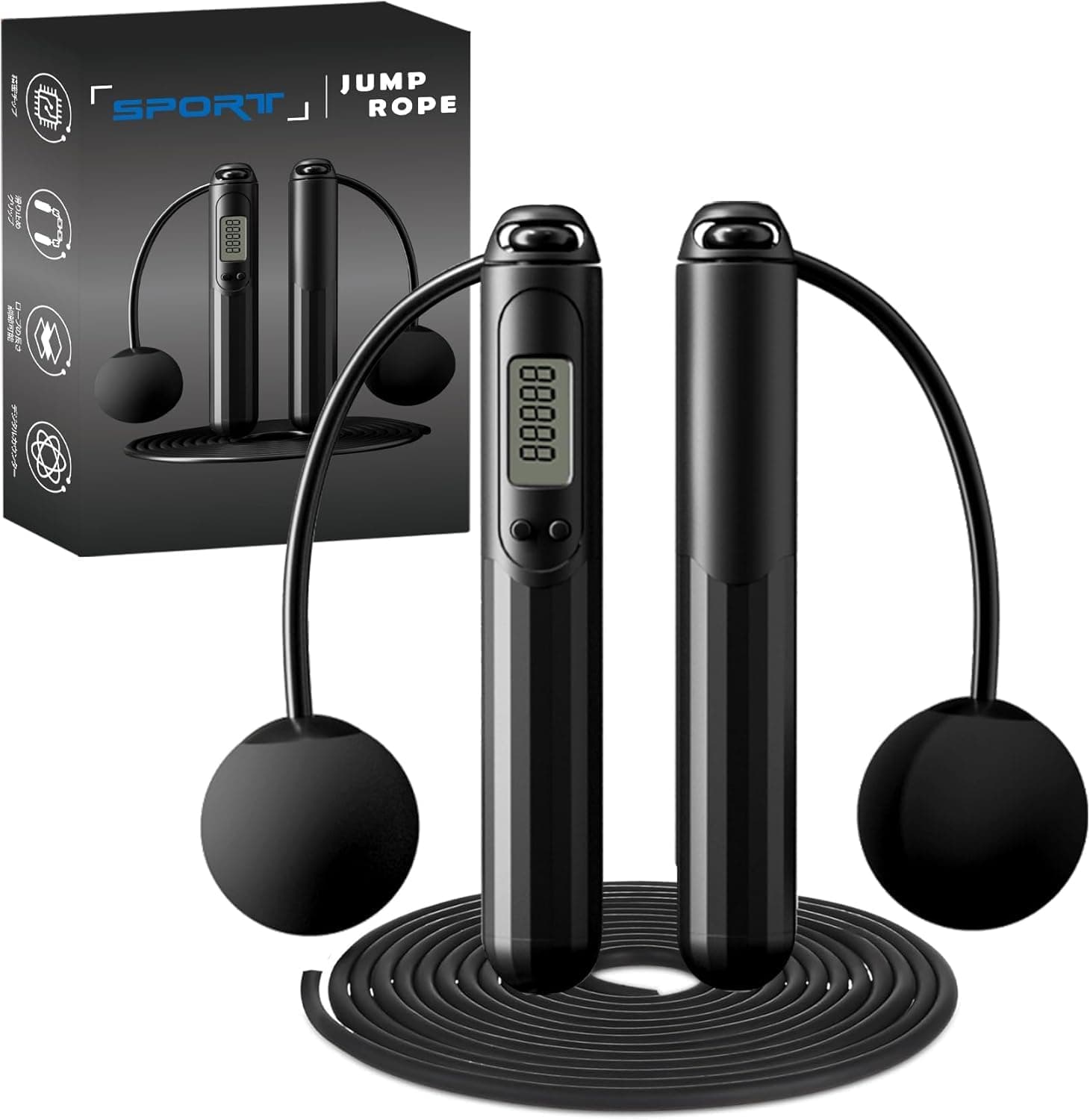
Jump Rope with Counter - 2-in-1 Weighted Corded & Cordless Skipping Rope with LCD Display, Cordless jump rope,Adjustable Length Steel Ball Bearings Jumping Rope for Adults Fitness, Home Gym Workout
- 🔥 2-in-1 Jump Rope with Counter: Cordless & Wired Modes Switch seamlessly between weighted ball cordless skipping for rhythm training and traditional wired jumping for speed. Perfect for HIIT, boxing, gym, or outdoor cardio – one rope adapts to all workouts!
- 💪 Weighted Ball Design for Smooth, Wobble-Free Rhythm Steel ball bearings in each handle ensure balanced rotation and prevent tangling, while non-slip ergonomic grips fit all hand sizes (kids 6+ to adults). Sweat-proof even during intense sessions!
- 📊 LED Display Tracks Jumps, Time Smart counter with LCD screen auto-records every jump, workout duration. Syncs like a personal trainer – see real-time progress without stopping!